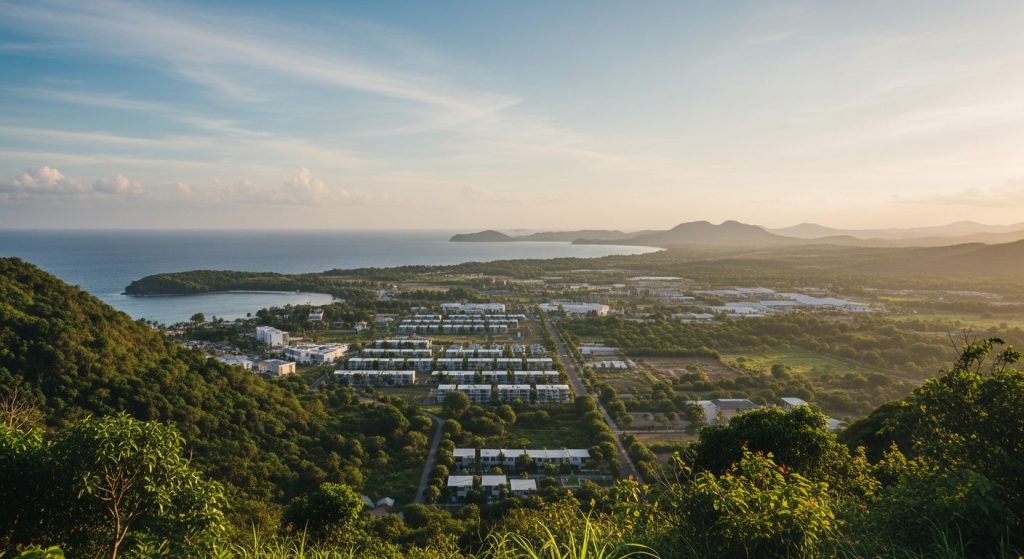
This **Mandalika property investment guide** offers a foundational overview for individuals and entities considering opportunities within the Mandalika Special Economic Zone (KEK Mandalika), Central Lombok. It translates complex information about tourism, property types, land titles, and regulatory frameworks into plain English, serving as a comprehensive resource for understanding the market.
**Disclaimer:** This page provides information and research for educational purposes only and should not be construed as investment, legal, financial, or tax advice. Property investment carries inherent risks. We do not provide recommendations or guarantees of return. Readers must always consult with licensed legal, property, and financial professionals, as well as official government channels like ITDC, BKPM, and OSS, before making any investment decisions. No one can pay to change what we publish; if you proceed with our partner they may pay us a referral fee at no extra cost to you.
—
Understanding KEK Mandalika: The Foundation for Investment
The Mandalika Special Economic Zone (KEK Mandalika) represents a significant government-backed initiative designed to establish a world-class tourism destination on the southern coast of Central Lombok, West Nusa Tenggara. Developed and managed by the Indonesia Tourism Development Corporation (ITDC), a state-owned enterprise, KEK Mandalika encompasses a master-planned area of 1,175 hectares. Its strategic development focuses on high-end tourism, hospitality, and supporting infrastructure.
ITDC’s role extends beyond master planning; it is responsible for developing core infrastructure, including roads, utilities, and public facilities, to attract both domestic and international investors. The comprehensive master plan divides the KEK into various zones, such as the Core Zone, Resort Zone, and Eco-Tourism Zone, each with specific permissible uses and development guidelines. This structured approach aims to ensure sustainable growth and a cohesive tourism ecosystem.
The Pertamina Mandalika International Street Circuit: A Key Demand Driver
Central to Mandalika’s development and its appeal as a tourism real estate investment location is the Pertamina Mandalika International Street Circuit. This purpose-built racing facility has become an anchor attraction, hosting major international motorsport events like the MotoGP World Championship and the Superbike World Championship (WSBK).
The impact of these events on local tourism and the broader economy is substantial. The MotoGP race in 2022, for instance, drew over 100,000 spectators, while the WSBK event in 2023 attracted more than 50,000 attendees. These figures underscore the circuit’s capacity to generate significant visitor traffic, driving demand for accommodation, services, and related tourism infrastructure. The circuit’s presence has accelerated job creation, stimulated local businesses, and spurred further investment in hotels, villas, and commercial spaces within and around the KEK. It is a primary engine behind the `mandalika tourism real estate investment` landscape.
Mandalika’s Tourism Growth Trajectory
Lombok as a whole has witnessed a steady increase in visitor numbers, recovering strongly post-pandemic. In 2019, Lombok recorded approximately 4 million visitors. While global travel restrictions impacted these figures, 2023 saw a significant rebound, with around 2.5 million visitors to Lombok. KEK Mandalika is positioned to capture a growing share of this market, with ITDC targeting 2 million visitors specifically for Mandalika by 2026.
This ambitious target is supported by ongoing infrastructure improvements, including enhancements to Lombok International Airport (LIA) and upgraded road networks connecting the airport to Mandalika. The influx of tourists, particularly those attending major events or seeking premium resort experiences, directly translates into increased demand for hospitality and accommodation options, bolstering the case for `lombok property investment 2026 opportunities`.
Hotel Pipeline and Future Capacity
The confidence of international hospitality brands in Mandalika’s potential is evident in the growing hotel pipeline. Currently, KEK Mandalika hosts established properties like the Pullman and Novotel resorts. The coming years are expected to see a significant expansion of luxury and mid-range accommodation.
Projects under construction or in advanced planning stages include prestigious names such as Royal Tulip, Meliá, The Ritz-Carlton Reserve, and Paramount. These developments collectively aim to add over 3,000 new rooms to KEK Mandalika’s inventory by 2026. This expansion indicates a strong market belief in sustained tourism growth and provides a benchmark for the quality and scale of `mandalika tourism hospitality investment opportunities` available.
Property Investment Types in Mandalika
The Mandalika Special Economic Zone offers a diverse range of property investment opportunities, catering to various investor profiles and capital commitments. Understanding the characteristics of each asset type is crucial for making informed decisions.
Hotels & Resorts
Investing in hotels and resorts within Mandalika typically involves larger capital outlays and often takes the form of direct ownership of a development, or participation in a larger fund or consortium. These properties are generally situated on ITDC-managed land plots, which are leased for long terms.
* **Characteristics:** Large-scale developments, often managed by international hospitality brands, providing full-service amenities.
* **Target Investors:** Institutional investors, experienced hospitality groups, high-net-worth individuals seeking significant operational involvement or strategic partnerships.
* **Investment Structure:** Often involves a Hak Guna Bangunan (HGB) title for the land, allowing construction and operation for an initial term of 30 years, extendable for 20+30 years (total 80 years).
* **Income Potential:** Revenue generated from room nights, food and beverage, events, and ancillary services. Performance is highly dependent on management quality, brand strength, and market occupancy rates.
Villas
Villas represent a popular `mandalika villa investment` avenue, offering a blend of personal use and rental income potential. These can range from standalone private residences to units integrated within larger resort complexes, often benefiting from resort management services.
* **Characteristics:** Private dwelling units, varying in size and luxury, from one-bedroom retreats to multi-bedroom estates. Many offer private pools and scenic views.
* **Target Investors:** Individual investors, families, or small groups seeking a tangible asset with lifestyle benefits and income generation.
* **Investment Structure:** Can involve leasehold agreements on private land outside the KEK, or Hak Pakai/HGB arrangements within the KEK, especially for integrated resort villas.
* **Income Potential:** Rental income through short-term holiday rentals (e.g., Airbnb, booking platforms) or longer-term leases. Occupancy and rental rates fluctuate with seasonal demand and event schedules. Management services can significantly impact net yields.
Raw Land
Investing in `mandalika land investment near motogp circuit` or in other designated zones within the KEK, or even in surrounding private areas, can be a long-term play for capital appreciation. Land speculation requires a thorough understanding of zoning regulations and future development plans.
* **Characteristics:** Undeveloped plots of land, varying significantly in size, location, and permissible use. Prices are influenced by proximity to infrastructure, views, and zoning.
* **Target Investors:** Speculative investors, developers planning future projects (commercial, residential, hospitality), or individuals seeking a long-term asset.
* **Investment Structure:** Within the KEK, ITDC offers specific land plots with HGB titles for commercial development or Hak Pakai for specific uses. Outside the KEK, private land may be available via leasehold agreements for foreigners or Hak Milik for Indonesian citizens.
* **Income Potential:** Primarily through capital appreciation as infrastructure develops and demand grows. Limited immediate income unless developed for a specific purpose. Zoning compliance and development timelines are critical considerations. `itdc mandalika available land plots` are often marketed with specific development guidelines.
Branded Residences
Branded residences are a growing segment of the Mandalika luxury market, combining the benefits of a private home with the services and amenities of a high-end hotel or resort. These are typically managed by renowned international hotel brands, offering owners a prestigious address and potential rental income through a managed pool.
* **Characteristics:** High-spec luxury apartments or villas, integrated into a five-star resort, benefiting from brand-standard services (concierge, housekeeping, security) and amenities (spas, restaurants, pools).
* **Target Investors:** High-net-worth individuals seeking a hassle-free luxury lifestyle, potential rental income, and the prestige and quality assurance of a global brand. This is a key `mandalika branded residences investment` opportunity.
* **Investment Structure:** Typically involves a long-term leasehold or Hak Pakai arrangement, with a management agreement dictating rental pool participation and service charges.
* **Income Potential:** Rental income generated when the residence is placed into the hotel’s rental pool, often sharing revenue with the operator. Benefits from the brand’s marketing power and operational efficiency. Appreciation in value is also influenced by the brand’s reputation and overall market performance.
Here’s a comparative overview of the main property types:
- Hotels & Resorts
-
- **Capital:** Very High
- **Risk:** High (operational, market cycles)
- **Liquidity:** Low (large, complex transactions)
- **Income:** Operational revenue (rooms, F&B), dependent on management & occupancy
- **Title:** HGB (ITDC land)
- **Complexity:** High (operations, branding, large-scale development)
- Villas
-
- **Capital:** Medium-High
- **Risk:** Medium (rental market fluctuations, maintenance)
- **Liquidity:** Medium (can be slower to sell than stocks, faster than large resorts)
- **Income:** Rental income, potential for personal use
- **Title:** Leasehold (private land) or Hak Pakai/HGB (KEK integrated)
- **Complexity:** Medium (property management, marketing for rentals)
- Raw Land
-
- **Capital:** Medium-Low to Medium-High (depending on size/location)
- **Risk:** Medium-High (zoning changes, market delays, limited immediate income)
- **Liquidity:** Low (can take time to sell, dependent on development interest)
- **Income:** Primarily capital appreciation; no immediate income without development
- **Title:** Leasehold (private land) or HGB/Hak Pakai (ITDC land)
- **Complexity:** Medium (due diligence on zoning, master plan, future infrastructure)
- Branded Residences
-
- **Capital:** High
- **Risk:** Medium (market cycles, brand performance, management fees)
- **Liquidity:** Medium (niche market, but supported by brand)
- **Income:** Rental pool share, personal use, appreciation
- **Title:** Leasehold or Hak Pakai (often structured via management agreement)
- **Complexity:** Medium (understand management agreements, brand standards)
Navigating Land Titles and Ownership for Foreigners
Understanding land titles in Indonesia, particularly within a Special Economic Zone like Mandalika, is critical for any property investor, especially foreigners. Indonesian land law differs significantly from many Western jurisdictions, and specific regulations apply to foreign ownership. This section clarifies the primary title structures relevant to `buy property mandalika sez` and surrounding areas, focusing on how `foreigners buy property mandalika lombok`.
**Crucial Point:** Indonesian law prohibits foreign individuals from directly owning land under a “Hak Milik” (Freehold) title. This is a fundamental principle that underpins all foreign property investment structures.
Hak Guna Bangunan (HGB – Right to Build)
* **Description:** HGB is the most common title for commercial and large-scale residential developments in Indonesia. It grants the right to construct and possess buildings on state land or land held under Hak Pengelolaan (Right to Manage) by an entity like ITDC, or even on Hak Milik land, for a specified period.
* **Term:** Within KEK Mandalika, ITDC typically grants HGB titles for an initial period of 30 years, extendable for another 20 years, and then renewable for a further 30 years, totaling a potential 80 years.
* **Who can hold it:** Indonesian legal entities (companies), including foreign-owned companies (PT PMA – *Penanaman Modal Asing*), can hold HGB titles. This is the primary mechanism for foreign corporate investment in property development within the KEK.
Hak Pakai (Right to Use)
* **Description:** Hak Pakai grants the right to use and/or collect produce from state land, Hak Pengelolaan land, or Hak Milik land. It’s often utilized for non-commercial purposes or for individual foreign ownership structures.
* **Term:** Similar to HGB, Hak Pakai titles for foreigners within KEK Mandalika are typically granted for an initial 30 years, extendable for 20 years, and renewable for another 30 years, amounting to a potential 80-year term.
* **Who can hold it:** Foreign individuals residing in Indonesia, foreign legal entities established under Indonesian law, and even certain Indonesian entities can hold Hak Pakai. For foreign individuals, this is the most direct legal avenue to control property within the KEK for residential purposes.
Leasehold (Sewa)
* **Description:** Leasehold refers to an agreement where a foreign individual or entity leases land or property from an Indonesian Hak Milik owner for a specified period. This is common for private villa investments outside of ITDC’s direct control.
* **Term:** Lease agreements can vary widely, typically ranging from 25 to 30 years, often with options to extend for additional periods, totaling 50-100 years. The terms are negotiated directly between the lessor and lessee.
* **Who can hold it:** Foreign individuals and entities can enter into leasehold agreements. This structure provides a practical way for foreigners to control land for personal use or rental income without directly owning a title.
Hak Milik (Freehold)
* **Description:** Hak Milik is the strongest form of land title in Indonesia, granting full, indefinite ownership rights, akin to freehold.
* **Term:** Indefinite.
* **Who can hold it:** Only Indonesian citizens and certain Indonesian legal entities wholly owned by Indonesian citizens can hold Hak Milik. Foreigners cannot directly hold this title. Any offer of “freehold” to a foreigner in Indonesia is legally unsound and should be a major red flag requiring immediate legal counsel.
Navigating these land title structures requires meticulous due diligence and the guidance of licensed Indonesian legal counsel. Misunderstanding these regulations can lead to significant legal and financial complications.
Tax Incentives and Regulatory Environment
One of the primary advantages of investing within a Special Economic Zone like Mandalika is the package of tax and non-tax incentives designed to attract both domestic and foreign investment. These incentives are granted by the Indonesian government and are administered through various agencies.
Key Tax Incentives in KEK Mandalika
The specific incentives can vary based on the type and scale of investment, but generally include:
* **Income Tax (PPh Badan) Facilities:**
* **Tax Holiday:** Up to 100% reduction in corporate income tax for a period ranging from 10 to 25 years, depending on the investment value (e.g., minimum IDR 100 billion for certain sectors).
* **Tax Allowance:** A reduction of net income by 30% of the investment value (over 6 years at 5% per year), accelerated depreciation, and a lower withholding tax on dividends for non-resident taxpayers.
* **Conditions Apply:** Eligibility for these incentives is typically tied to specific investment criteria, such as minimum investment value, business sector (e.g., tourism, hospitality, MICE), and job creation targets.
* **Value Added Tax (VAT) and Sales Tax on Luxury Goods (PPnBM) Exemptions:**
* Certain goods and services, including the import of capital goods, raw materials, and specific services for KEK activities, may be exempt from VAT and PPnBM. This aims to reduce the upfront cost of development and operation.
* **Import Duty Exemptions:**
* Exemption from import duties for the import of capital goods, machinery, and raw materials used for KEK activities. This significantly lowers the cost of establishing new tourism infrastructure.
* **Land and Building Tax (PBB) Reductions:**
* While not a central government incentive, regional governments often provide reductions or exemptions on Land and Building Tax for properties within KEKs to further encourage development.
**Important Note:** These incentives are subject to change and specific implementation regulations. Investors must verify their eligibility and the exact terms with official government bodies.
Regulatory Environment: BKPM and OSS
Indonesia has made efforts to streamline the investment process, particularly for foreign investors. Key institutions in this regard include:
* **Badan Koordinasi Penanaman Modal (BKPM – Indonesia Investment Coordinating Board):** BKPM is the primary government agency responsible for investment promotion and facilitating investment in Indonesia. It serves as a single window for investors, assisting with licenses, permits, and connecting investors with relevant ministries and local governments. For KEK Mandalika, BKPM plays a crucial role in processing applications for tax incentives and other investment facilities.
* **Online Single Submission (OSS) System:** The OSS system is an online platform designed to simplify the business licensing process across various sectors. Investors can apply for business identification numbers (NIBs), business licenses, and other operational permits through this centralized digital portal, aiming to reduce bureaucratic hurdles and improve efficiency.
While the regulatory environment in KEK Mandalika is designed to be investor-friendly, navigating the specifics requires professional guidance. Policies and their interpretations can evolve, necessitating up-to-date advice.
Indicative Investment Considerations: ROI and Feasibility
Discussions around Return on Investment (ROI) and feasibility in the Mandalika property market must be approached with caution and grounded in realistic expectations. No investment guarantees returns, and the performance of any property is subject to a multitude of variables. Our aim is to provide context and research parameters for `is mandalika property a good investment`, not to offer promises or financial advice.
Factors Influencing ROI and Feasibility
The potential for ROI in Mandalika is highly variable, influenced by:
1. **Property Type:** As discussed, hotels, villas, raw land, and branded residences have different risk-reward profiles, capital requirements, and income generation mechanisms. A luxury resort will have a different operational cost structure and revenue model than a private rental villa.
2. **Location within the KEK:** Proximity to the MotoGP circuit, beachfront access, views, and integration into ITDC’s core development zones can significantly impact property values and rental appeal. Areas with established infrastructure and amenities typically command higher prices and potentially better occupancy.
3. **Quality of Development and Management:** High-quality construction, thoughtful design, and professional property or hospitality management are critical drivers of occupancy rates, daily rental rates, and overall asset value. Poor management can erode profitability.
4. **Market Conditions and Tourism Growth:** While Mandalika has strong growth potential, market fluctuations, changes in global travel patterns, and economic downturns can affect tourism numbers and, consequently, rental income and property values. The pace of ITDC’s infrastructure development and the success of future major events also play a role.
5. **Occupancy Rates and Average Daily Rates (ADR):** For income-generating properties like hotels and villas, these are direct determinants of revenue. Events like MotoGP bring peak demand, but sustainable year-round tourism is essential for consistent returns.
6. **Operating Costs:** These include maintenance, utilities, staff salaries, marketing, insurance, and property taxes. A thorough projection of these costs is essential for accurate feasibility analysis.
7. **Financing Costs:** Interest rates and loan terms significantly impact the net return, especially for leveraged investments.
**Indicative Yield Considerations (Last Verified June 2026):**
It is challenging to provide precise yield figures due to market variability and the nascent stage of some developments. However, based on general market observations and discussions with industry professionals, investors might consider the following *ranges for analysis*:
* **Luxury Villas (Rental Pool):** Gross rental yields (before operating costs, taxes, and management fees) for well-managed luxury villas participating in rental programs within established resorts could range from 5% to 10% per annum, highly dependent on occupancy and seasonal pricing. Net yields would be considerably lower after deductions.
* **Mid-Range Hotels:** For new, professionally managed hotels, initial gross operating profit (GOP) margins might target 25-35% of revenue, with net profit after all expenses and debt service varying significantly.
* **Raw Land:** Returns on raw land are primarily driven by capital appreciation over the medium to long term, making annual yield calculations less relevant. Appreciation rates are speculative and depend on surrounding development, zoning changes, and overall market demand. Historically, land values in developing tourism areas in Indonesia have seen substantial appreciation over decades, but this is not guaranteed for Mandalika.
These figures are *illustrative estimates* for research and contextual purposes only. They are not predictions or promises of future performance. A comprehensive feasibility study conducted by independent consultants, incorporating specific project details and up-to-date market data, is indispensable before any investment decision.
The `lombok property investment 2026 opportunities` are predicated on the continued rollout of the ITDC master plan and the sustained appeal of the circuit and natural attractions. Each property type requires a distinct approach to feasibility and risk assessment.
Mandalika Property Investment vs. Other Asset Classes (e.g., Stock Market)
Prospective investors often weigh property investment against other asset classes, such as the stock market. Each has distinct characteristics regarding risk, liquidity, capital requirements, and potential returns. Understanding these differences can help position `mandalika property investment for beginners` within a broader portfolio strategy and aids in `mandalika property investment vs stock market comparison`.
| Feature | Mandalika Property Investment | Stock Market Investment |
|---|---|---|
| **Asset Type** | Tangible asset (land, buildings) | Intangible asset (shares in companies) |
| **Liquidity** | Low. Selling property can take months or years. | High. Stocks can be bought and sold quickly during market hours. |
| **Capital Required** | High. Significant upfront capital for purchase, development, or down payment. | Variable. Can start with small amounts, scaling up. |
| **Income Stream** | Potential for rental income, operational profits (hotels), or capital appreciation. | Potential for dividends and capital gains from stock price increases. |
| **Volatility** | Generally less volatile day-to-day, but subject to market cycles, local development, and tourism trends. | Highly volatile, subject to company performance, economic news, and global events. |
| **Inflation Hedge** | Often considered a good hedge against inflation, as property values and rents tend to rise with inflation. | Can be an inflation hedge if companies can pass on costs, but not inherently so. |
| **Leverage Potential** | High. Mortgages and property loans allow for significant leverage, amplifying returns (and risks). | Limited leverage for typical retail investors (margin accounts carry specific risks).
Authoritative references: Foreign ownership of real property · Property law · Bali · Economy of Indonesia |