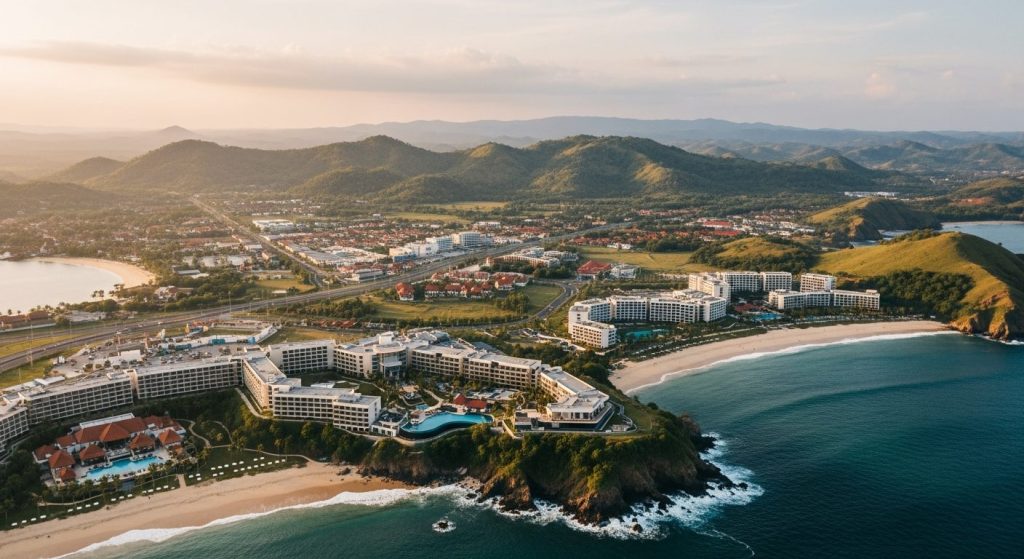
Mandalika investment ROI (Return on Investment) analysis for the Mandalika Special Economic Zone (KEK Mandalika) involves evaluating potential gains against costs, considering factors like tourism growth, property appreciation, and operational yields. Calculating mandalika investment return how much an investor can realistically expect requires a detailed assessment of market dynamics, specific project types, and the regulatory environment within this developing tourism hub in Central Lombok.
This guide provides an analytical framework for understanding potential returns in KEK Mandalika. We will explore hospitality and property investment ROI, rental yields, and the key drivers influencing these figures. All figures presented are illustrative benchmarks for general understanding and should not be taken as financial advice or guarantees of future performance. Realized returns are subject to market fluctuations, operational efficiencies, and unforeseen economic shifts. Always consult licensed financial professionals and official government channels (ITDC, BKPM, OSS) for project-specific feasibility studies and verified data.
Understanding Mandalika Investment ROI: A Framework
The Mandalika Special Economic Zone is a government-designated area designed to accelerate tourism and economic development in Lombok. Its status grants various incentives and aims to attract significant capital, primarily into tourism infrastructure like hotels, resorts, and supporting amenities. Investors considering Mandalika evaluate ROI through several lenses: capital appreciation (for land and property), rental yield (for income-generating assets like villas and hotels), and overall business profitability.
A robust mandalika hospitality investment roi feasibility study typically considers:
1. **Initial Investment:** Land acquisition, construction, permits, pre-opening expenses.
2. **Revenue Projections:** Occupancy rates, Average Daily Rate (ADR), ancillary income (F&B, spa, activities).
3. **Operating Expenses:** Staffing, utilities, maintenance, marketing, management fees.
4. **Tax Incentives:** Reductions or exemptions specific to SEZs.
5. **Exit Strategy:** Potential resale value or long-term cash flow.
The confluence of these factors determines the mandalika property expected return analysis, which can vary significantly between different asset classes and operational models.
The Impact of Tourism Demand: MotoGP and Beyond
The Mandalika International Circuit, home to the Indonesian MotoGP series, is a primary driver of tourism demand and a significant factor in mandalika hotel occupancy rate business model projections. While MotoGP events provide peak demand periods, the long-term sustainability of investment returns relies on broader tourism development orchestrated by the Indonesia Tourism Development Corporation (ITDC).
**Key Demand Drivers:**
* **MotoGP & Major Events:** These events create surges in demand for accommodation, often pushing occupancy rates to 90-100% and allowing for premium pricing during the event week. This concentrated demand significantly impacts annual RevPAR (Revenue Per Available Room).
* **ITDC Master Plan:** The ITDC’s ongoing development of hotels, resorts, commercial areas, and public facilities aims to create a year-round destination, moving beyond event-driven tourism. This includes infrastructure like water parks, golf courses, and cultural centers.
* **Accessibility:** Enhancements to Lombok International Airport (BIL) and improved road networks within Central Lombok facilitate easier access for domestic and international tourists. Direct flights from various cities are expanding.
* **Natural Attractions:** Lombok’s existing appeal — pristine beaches (Tanjung Aan, Kuta Mandalika), surfing spots, and proximity to the Gili Islands and Mount Rinjani — complements the planned tourism infrastructure, attracting a diverse visitor base.
* **Government Focus:** The Indonesian government’s commitment to Mandalika as one of its “10 New Balis” initiatives underscores sustained policy support and investment.
Understanding these demand drivers is crucial for projecting mandalika resort investment cash flow analysis, as they directly influence revenue streams for hospitality assets.
Hospitality & Resort Investment ROI Feasibility
For hospitality assets like hotels, resorts, and villas, mandalika hospitality investment roi feasibility is primarily driven by occupancy rates, average daily rates (ADR), and efficient operational management.
Occupancy Rate and ADR Assumptions
Projecting realistic occupancy rates requires differentiating between event-driven peaks and off-peak periods.
* **Peak Season (MotoGP, holidays):** Occupancy can reach 90-100% with premium ADRs. These periods, while short, contribute disproportionately to annual revenue.
* **Shoulder Season:** Moderate occupancy, potentially 50-70%, with standard ADRs, driven by regional tourism and smaller events.
* **Low Season:** Lower occupancy, perhaps 30-50%, requiring strategic marketing and promotions to maintain competitive rates.
A blended annual occupancy rate for a well-managed property in KEK Mandalika might range from **45-65%** in the initial years, increasing as the destination matures and more attractions become operational. ADRs are highly dependent on the property’s star rating, amenities, and market positioning. For a mid-range hotel, ADRs might range from IDR 700,000 to IDR 1,500,000, while luxury resorts could command significantly higher rates.
Operating Costs and Cash Flow Analysis
Operating expenses for hotels and resorts typically include:
* **Staffing:** A major component, influenced by local wage rates and skill availability.
* **Utilities:** Electricity, water, internet.
* **Maintenance & Repairs:** Ongoing upkeep of facilities.
* **Marketing & Sales:** Essential for driving bookings and brand visibility.
* **Management Fees:** If operated by a third-party hotel management company (typically 2-4% of gross revenue plus incentive fees).
* **Property Taxes & Permits:** Local government levies.
A thorough mandalika resort investment cash flow analysis will detail these costs against projected revenues to determine net operating income (NOI). The NOI, when considered against the total investment, forms the basis for calculating ROI.
Illustrative ROI Ranges for Hospitality
Based on various market analyses and public information, initial projections for lombok hotel investment roi yield 10-15 percent are often cited for well-managed, strategically located properties within KEK Mandalika. These figures are targets and depend heavily on:
* **Capital Efficiency:** How effectively the initial investment is deployed.
* **Operational Excellence:** The ability to maximize occupancy and ADR while controlling costs.
* **Market Maturity:** Returns are likely to grow as KEK Mandalika develops and attracts more consistent visitor numbers.
**Example Calculation Framework (Illustrative, not a guarantee):**
| Metric | Illustrative Range (Annual) | Notes |
| :————————– | :————————– | :——————————————————————————————————————————– |
| Total Investment (USD) | $5M – $20M+ | Land, construction, FF&E, pre-opening. Varies by scale & segment. |
| Gross Revenue (USD) | $1M – $5M+ | Based on occupancy, ADR, F&B, other services. Highly variable. |
| Operating Expenses (USD) | $500K – $2.5M+ | Staffing, utilities, maintenance, marketing, management fees. |
| Net Operating Income (NOI) | $500K – $2.5M+ | Gross Revenue – Operating Expenses (before debt service, taxes, depreciation). |
| Capitalization Rate (Cap Rate) | 8% – 12% | NOI / Property Value. Market-driven; lower in early stages, higher with stability. |
| Cash-on-Cash Return | 6% – 10% | Annual Pre-Tax Cash Flow / Cash Invested. Considers financing structure. |
| Internal Rate of Return (IRR) | 10% – 18% | Discount rate at which the NPV of all cash flows equals zero. Long-term metric. |
*Note: These ranges are generalized and for illustrative purposes only. Actual project-specific figures will vary based on numerous factors including location, design, brand, management, and prevailing market conditions. Consult a qualified professional for precise projections.*
Property and Land Investment ROI Forecast
Beyond hospitality operations, direct property and land acquisition present another avenue for mandalika investment roi, primarily through capital appreciation and rental yields.
Land Price Appreciation
The development of KEK Mandalika has significantly impacted land values in Central Lombok. Early investors who acquired land before major infrastructure projects commenced have already seen substantial appreciation. The mandalika land price appreciation 15 20 percent per annum has been observed in some areas, particularly plots within or immediately adjacent to the SEZ.
**Factors Driving Land Appreciation:**
* **SEZ Designation:** The special economic zone status provides regulatory advantages and attracts further development, increasing demand for land.
* **Infrastructure Development:** Roads, utilities, and public facilities enhance the usability and value of surrounding land.
* **Tourism Growth:** Increased visitor numbers and the establishment of new resorts drive demand for commercial and residential plots.
* **Scarcity:** Prime beachfront or developable land within the SEZ is finite, contributing to its increasing value.
* **Government Support:** Ongoing commitment to Mandalika’s development acts as a long-term confidence booster for investors.
While past performance is not indicative of future results, the continued development trajectory and strategic importance of Mandalika suggest potential for sustained appreciation, albeit potentially at a more moderate pace as the market matures.
Rental Yield for Villas and Private Properties
For investors acquiring villas, apartments, or other private properties, mandalika rental yield property offers a direct income stream. This is particularly relevant for properties available for short-term holiday rentals.
**Yield Calculation:**
Rental yield is typically calculated as (Annual Rental Income / Property Purchase Price) x 100%.
* **Gross Rental Yield:** Does not account for expenses.
* **Net Rental Yield:** Accounts for all operating expenses (management fees, maintenance, utilities, taxes).
Illustrative net rental yields for well-managed holiday villas in prime locations could range from **5-10%**, depending on design, amenities, booking platform visibility, and local management efficiency. Properties near the circuit or popular beaches like Tanjung Aan and Selong Belanak tend to command higher occupancy and rates.
**Mandalika Property Expected Return Analysis:**
A comprehensive analysis for property investors would combine:
1. **Rental Yield:** The annual income generated from the property.
2. **Capital Appreciation:** The increase in the property’s market value over time.
For a long-term investor, the combination of a steady rental yield and capital appreciation provides a strong overall mandalika property expected return analysis. For example, a property yielding 7% annually with 10% capital appreciation would offer a total illustrative return of 17% (before taxes and financing costs).
Key Drivers for Mandalika Investment Returns
Understanding the foundational elements that propel investment value in KEK Mandalika is critical for any mandalika investment return how much projection.
MotoGP and Event-Driven Tourism
The Mandalika International Circuit is more than a racetrack; it’s a magnet for global attention and a catalyst for tourism. Events like MotoGP bring tens of thousands of visitors, creating peak demand for accommodation, F&B, retail, and services. This event-driven demand provides substantial revenue spikes for hospitality businesses, which can subsidize operations during quieter periods and improve annual profitability. While the events are periodic, their economic ripple effect, including media exposure for Mandalika, is continuous.
ITDC Master Plan & Infrastructure Development
The Indonesia Tourism Development Corporation (ITDC) is the master developer for KEK Mandalika. Its master plan outlines extensive infrastructure development, including roads, utilities, water treatment, waste management, and public spaces, alongside specific zones for hotels, resorts, commercial areas, and residential units. This planned, integrated development provides a structured environment for investment, reducing risks associated with ad-hoc growth. The ongoing build-out of world-class infrastructure is a fundamental driver of increased property values and operational efficiency for businesses.
SEZ Incentives: Tax & Customs
KEK Mandalika’s Special Economic Zone status is a significant draw for investors. The Indonesian government offers a range of incentives designed to stimulate investment, including:
* **Tax Incentives:** Corporate income tax reductions or exemptions (tax holidays) for specific periods, potentially up to 20 years for large investments meeting certain criteria. Reductions in land and building tax, and VAT exemptions for certain goods and services within the SEZ.
* **Customs & Excise:** Exemptions or deferrals on import duties for capital goods, raw materials, and components used within the SEZ.
* **Streamlined Licensing:** A more efficient and integrated licensing process through the Online Single Submission (OSS) system.
* **Immigration Facilities:** Easier procedures for foreign workers and investors.
These incentives directly enhance mandalika investment roi by reducing operational costs and improving net profitability, making projects more financially attractive.
Comparative Advantage: Mandalika vs. Bali & Other SEZs
Comparing Mandalika to established destinations like Bali or other Indonesian SEZs helps contextualize its investment appeal.
- Mandalika vs. Bali:
-
- Mandalika: Newer, planned development; lower entry costs for land and property; significant potential for capital appreciation; government-backed master plan; less mature tourism infrastructure but rapid growth; MotoGP as a unique draw.
- Bali: Mature market; higher land prices; established tourism infrastructure and brand recognition; diverse visitor base; potential for saturation in some areas; more competitive operational environment.
Mandalika offers “ground floor” potential, while Bali offers established stability.
- Mandalika vs. Other Indonesian SEZs:
-
- Mandalika (Tourism-focused): Strong emphasis on hospitality, events, and leisure. Benefits from direct government tourism initiatives and branding.
- Other SEZs (e.g., Industrial, Tech): Often focused on manufacturing, logistics, or digital industries. While offering similar tax incentives, their market drivers and investment profiles differ significantly.
Mandalika’s unique selling proposition is its dedicated focus on high-value, integrated tourism, distinct from industrial or agricultural SEZs.
Is mandalika a good investment roi? The answer depends on an investor’s risk appetite, time horizon, and specific investment goals. For those seeking exposure to a rapidly developing, government-supported tourism destination with strong growth potential, Mandalika presents a compelling case.
Modeling Your Mandalika Investment ROI
A realistic mandalika resort roi calculator requires careful input of costs and revenue projections, along with a clear understanding of potential risks.
Essential Inputs for a Realistic Forecast
To develop a robust financial model, investors need to gather accurate data on:
* **Land Acquisition Costs:** Purchase price, legal fees, taxes. These vary significantly by location (beachfront, hill view, inland), zoning, and size. Last verified June 2026, land prices can range from IDR 50 million to IDR 300 million+ per are (100 sqm) for prime locations within or near the KEK, with further variations outside.
* **Construction Costs:** Building materials, labor, permits, design fees. These depend on the quality and scale of the development (e.g., budget hotel vs. luxury resort). General construction costs for a mid-range hotel might range from IDR 10 million to IDR 20 million per square meter, excluding land and FF&E.
* **Furniture, Fixtures & Equipment (FF&E):** Furnishings, kitchen equipment, linens, technology.
* **Pre-Opening Expenses:** Marketing, staff training, initial inventory.
* **Working Capital:** Funds needed to cover initial operational shortfalls.
* **Operational Expenses:** Detailed breakdown as discussed earlier (staff, utilities, maintenance, marketing, management).
* **Revenue Projections:** Based on realistic occupancy rates and ADRs for the target market segment, considering seasonal variations and event impacts.
* **Tax & Incentive Framework:** Incorporate applicable SEZ tax holidays, reductions, and other benefits.
* **Financing Costs:** Interest rates, loan terms, debt service.
Risk Factors and Due Diligence
While promising, KEK Mandalika investment carries inherent risks:
* **Market Risk:** Fluctuations in tourism demand, competition from new developments, changes in consumer preferences.
* **Operational Risk:** Difficulty in recruiting skilled labor, supply chain issues, management inefficiencies.
* **Regulatory Risk:** Changes in government policies, permits, or land use regulations.
* **Environmental Risk:** Natural disasters (though Lombok is less prone to severe seismic activity than some other Indonesian islands, general natural risks apply).
* **Liquidity Risk:** The ability to sell the asset quickly at a fair price, especially in a developing market.
Thorough due diligence, involving legal, financial, and market experts, is paramount to mitigate these risks and ensure the mandalika property roi forecast is grounded in reality. This includes verifying land titles, understanding local zoning laws, assessing environmental impact, and conducting comprehensive market studies.
Financing & Exit Strategies
Local and International Financing Options
Investors in KEK Mandalika can explore various financing avenues:
* **Equity Financing:** Direct investment by individuals, private equity firms, or institutional investors. This is common for initial development phases.
* **Debt Financing:** Loans from local Indonesian banks or international financial institutions. Eligibility often depends on the project’s feasibility, the investor’s creditworthiness, and the collateral offered.
* **Joint Ventures:** Partnering with local Indonesian entities (PMA – Penanaman Modal Asing, Foreign Investment Company) or other international investors to share capital and expertise.
* **Government-backed Programs:** While less common for direct project financing, certain government-supported programs may exist for infrastructure or sustainable tourism initiatives.
Exit Considerations
A clear exit strategy is part of a comprehensive mandalika investment roi plan:
* **Resale:** Selling the developed property or land to another investor or end-user. The timing of exit can significantly impact realized returns, often correlating with market maturity and appreciation.
* **Long-Term Hold:** Maintaining ownership to generate consistent rental income and benefit from sustained capital appreciation over decades.
* **Refinancing:** Using an appreciated asset to secure new debt, potentially cashing out some equity while retaining ownership.
Legal & Regulatory Framework
Investing in KEK Mandalika, like any foreign investment in Indonesia, requires navigating specific legal and regulatory pathways.
Who Can Invest: PMA, PMDN, and Local Partnerships
* **PMA (Penanaman Modal Asing – Foreign Investment Company):** Foreign investors typically establish a PMA company to own assets and operate businesses in Indonesia. This requires a minimum capital investment (often around IDR 10 billion or approximately USD 700,000, but can vary by sector and scale).
* **PMDN (Penanaman Modal Dalam Negeri – Domestic Investment Company):** Indonesian citizens or entities can establish a PMDN.
* **Local Partnerships:** Foreign investors often partner with local Indonesian entities, especially for land acquisition, as certain land titles (e.g., Hak Milik – freehold) are exclusively for Indonesian citizens. PMA companies can hold Hak Guna Bangunan (HGB – Right to Build) or Hak Guna Usaha (HGU – Right to Cultivate) titles for periods up to 30 years, extendable.
Key Permits and Licenses
Investors must obtain various permits, including:
* **Business Registration Number (NIB):** The primary registration for any business activity in Indonesia.
* **Location Permit:** For land use.
* **Building Permit (IMB):** For construction.
* **Environmental Permits (AMDAL/UKL-UPL):** Assessing environmental impact.
* **Operational Licenses:** Specific to the type of business (e.g., hotel license, restaurant license).
The Online Single Submission (OSS) System
Indonesia’s OSS system streamlines the business licensing process. Investors can apply for numerous permits and licenses online, simplifying what was historically a complex and time-consuming procedure. This system is a key component of the government’s efforts to improve the ease of doing business and enhance the appeal of SEZs like Mandalika.
Due Diligence Red Flags for Newcomers
New investors, especially those unfamiliar with the Indonesian market, often encounter pitfalls. Careful due diligence can help avoid common issues.
* **Unverified Land Titles:** Always verify land ownership and titles with a reputable local notary and land office (BPN). Issues with overlapping claims or unclear titles are common.
* **Informal Agreements:** Avoid entering into informal land agreements or verbal commitments. Ensure all agreements are legally documented and notarized.
* **Overly Optimistic Projections:** Be wary of investment proposals that promise unrealistically high returns without detailed, conservative financial modeling. The mandalika hospitality investment roi feasibility should be stress-tested against various scenarios.
* **Lack of Local Expertise:** Attempting to navigate the local market, regulations, and culture without experienced local legal counsel, property advisors, and operational partners can lead to costly mistakes.
* **Ignoring Infrastructure Costs:** For properties outside the main KEK development, ensure you account for the cost of bringing in utilities (electricity, water) and road access, which can be substantial.
* **Permit Delays:** While the OSS system streamlines processes, permit applications can still face delays. Factor this into project timelines.
For serious investors, engaging with trusted, licensed professionals is not an option, but a necessity. This includes lawyers for legal due diligence, accountants for financial structuring, and professional property advisors for market insights and transaction support.
Considering an investment in KEK Mandalika? The opportunity is significant, but a balanced, risk-aware approach is essential. To explore your specific interests and navigate the complexities of this evolving market, we recommend seeking expert guidance.
Ready to plan your investment journey in Mandalika? Contact us to connect with our vetted network of licensed legal, property, and advisory partners. We can also assist with initial inquiries via WhatsApp.
Frequently Asked Questions about Mandalika Investment Returns
Is Mandalika a good investment ROI?
Mandalika offers significant potential for investment ROI, particularly in hospitality and property, driven by government support, a master-planned tourism zone, and unique attractions like MotoGP. However, like any developing market, it carries inherent risks. A “good” ROI is subjective and depends on individual investor goals, risk tolerance, and the thoroughness of due diligence and operational management. Realistic projections often suggest potential for capital appreciation and competitive rental yields for well-executed projects.
How do I calculate mandalika investment return how much for my project?
To calculate your Mandalika investment return, you need to conduct a detailed financial feasibility study. This involves projecting all initial costs (land, construction, permits), ongoing operational expenses (staff, utilities, maintenance), and realistic revenue streams (occupancy rates, average daily rates, other income). Key metrics include Net Operating Income (NOI), Capitalization Rate (Cap Rate), Cash-on-Cash Return, and Internal Rate of Return (IRR). Always consult a licensed financial professional for accurate calculations tailored to your specific project.
What are the typical mandalika rental yield property expectations?
Typical net rental yields for well-managed holiday villas or income-generating properties in prime Mandalika locations could range from 5-10% annually. This figure depends on factors such as the property’s design, amenities, location (e.g., beachfront vs. inland), and the effectiveness of marketing and property management. These are illustrative figures; actual yields can vary.
What is the expected mandalika land price appreciation 15 20 percent?
While some areas within or adjacent to KEK Mandalika have historically seen land price appreciation in the range of 15-20% per annum, especially during early development phases, future appreciation rates are not guaranteed. The pace of appreciation will be influenced by continued infrastructure development, tourism growth, government policies, and overall market demand. Investors should base their forecasts on conservative projections and long-term market trends.
How do SEZ incentives impact mandalika investment roi?
SEZ incentives, such as corporate income tax holidays, reductions in land and building tax, and customs duty exemptions, can significantly enhance Mandalika investment ROI by reducing initial capital outlay and ongoing operational costs. These benefits directly increase net profitability and accelerate the payback period for investments, making projects more financially attractive compared to those outside an SEZ.
For serious inquiries and to proceed with investment plans, we strongly recommend engaging with licensed legal, financial, and property professionals who specialize in Indonesian foreign investment. We can connect you with vetted partners, and for any transactions you may proceed with through our referral partners, they may pay us a referral fee at no extra cost to you. We do not publish content influenced by payments; our integrity and independence are paramount. For official information and regulatory guidance, always refer to ITDC, BKPM (Indonesia Investment Coordinating Board), and the OSS system.