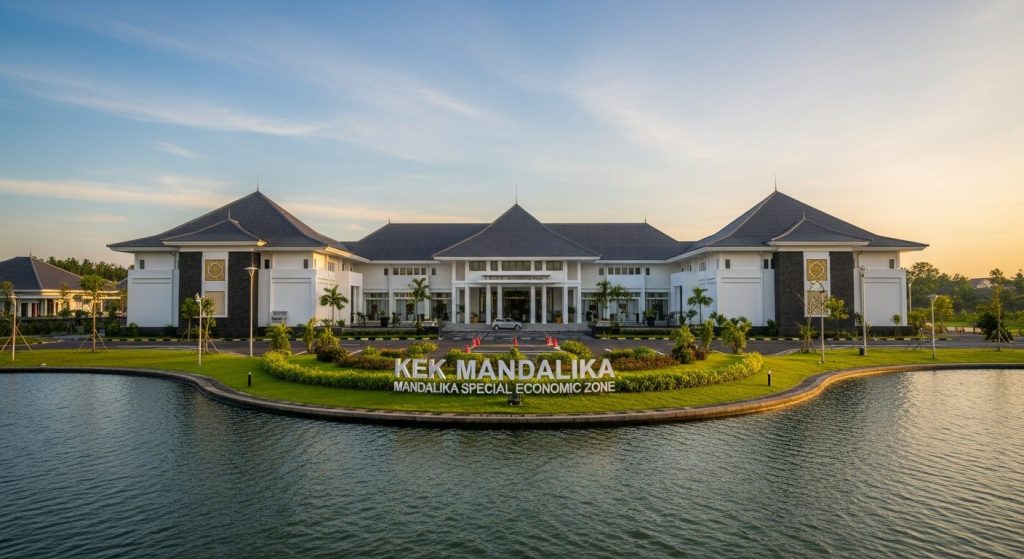
The **KEK Mandalika investment cost** varies significantly based on the type, scale, and location of the project. For foreign investors establishing a PT PMA (Perseroan Terbatas Penanaman Modal Asing – Foreign Investment Company), the mandated minimum paid-up capital required by Indonesian law stands at IDR 10 billion (approximately USD 650,000 – 700,000, subject to exchange rate fluctuations). This figure, however, does not include the cost of land acquisition or property development within the Mandalika Special Economic Zone.
This page provides a transparent framework for understanding the various components that contribute to the overall mandalika investment price, helping serious investors size their budget before engaging with licensed professionals. Mandalika, located in Central Lombok, West Nusa Tenggara, presents a unique investment landscape anchored by the Pertamina Mandalika International Street Circuit and a strategic focus on tourism development.
Understanding KEK Mandalika Investment Costs
Investing in KEK Mandalika requires a clear understanding of the various financial commitments involved. Unlike simple property purchases in mature markets, an investment in a developing special economic zone encompasses more than just land and construction. It involves navigating regulations, leveraging incentives, and planning for operational realities. The overall **kek mandalika how much investment** question requires a multi-faceted answer.
The KEK Mandalika Advantage: Incentives and Location
KEK Mandalika is managed by the Indonesia Tourism Development Corporation (ITDC) and designated as a Special Economic Zone (SEZ), offering a suite of fiscal and non-fiscal incentives. These are designed to attract investment and foster economic growth. Fiscal incentives can include corporate income tax reductions (up to 100% for 10-25 years depending on investment value and sector), exemption from import duties, VAT, and luxury goods tax on certain capital goods, and land and building tax reductions. Non-fiscal incentives encompass simplified licensing processes via the Online Single Submission (OSS) system, facilitated land acquisition, and streamlined immigration procedures for key personnel. These incentives can significantly influence the long-term viability and effective cost of an investment.
The zone’s location in Central Lombok provides access to an international airport (Lombok International Airport, BIL/LOP) and a growing tourism infrastructure. Proximity to the MotoGP circuit is a primary driver for demand in hospitality and related services.
Key Cost Drivers: Location, Scale, and Type
The primary factors determining the **mandalika investment cost breakdown** include:
* **Location within KEK Mandalika**: Plots closer to the circuit, beachfront, or with established infrastructure typically command higher prices.
* **Scale of the project**: A single villa project will have a different cost structure than a multi-unit resort or a large-scale commercial development.
* **Type of development**: Residential villas, boutique hotels, large resorts, commercial spaces (retail, F&B), or tourism support facilities each have distinct construction and operational cost profiles.
* **Land tenure**: Leasehold (Hak Guna Bangunan – HGB) or Right to Use (Hak Pakai) each come with different initial acquisition costs and long-term implications.
* **Quality of construction and finishes**: From basic to premium, material choices and design complexity directly impact build costs.
Minimum Capital Requirements for Foreign Investors (PT PMA)
A fundamental aspect of foreign investment in Indonesia, including KEK Mandalika, is the establishment of a PT PMA. This legal entity allows foreign individuals or companies to operate businesses in Indonesia.
The IDR 10 Billion Threshold: What it Means
The **mandalika investment minimum capital requirement** for a PT PMA is set by the Indonesian Investment Coordinating Board (BKPM) at IDR 10 billion. This figure represents the *authorized capital* that must be declared, with a *paid-up capital* requirement of at least 25% of the authorized capital. In practice, BKPM and the OSS system typically expect the IDR 10 billion to be *realized* or *paid-up* as the minimum investment value, excluding land and buildings. This means the company must demonstrate access to or deployment of these funds for operational capital, equipment, or initial working capital.
This threshold is a crucial entry point for foreign investors and impacts the scope of business activities a PT PMA is permitted to undertake. It signals a serious commitment to the Indonesian economy.
Exclusions: Land and Buildings
Crucially, the IDR 10 billion **pt pma indonesia minimum capital requirement** typically *excludes* the value of land and buildings. This distinction is vital for budgeting. An investor planning a resort may need to allocate IDR 10 billion for their PT PMA’s operational capital (e.g., initial staffing, marketing, operational licenses, equipment) *in addition to* the funds required for land acquisition and construction. This structure ensures that the PT PMA has a substantial capital base independent of its real estate assets.
Navigating BKPM and OSS Processes
The investment process for foreign entities is largely managed through the Online Single Submission (OSS) system, integrated with BKPM. This system simplifies the application for business licenses, permits, and incentives. Investors must register their PT PMA, declare their investment plan, and obtain the necessary business identification numbers (NIB) and operational licenses. The OSS system aims to create a more efficient and transparent investment environment, though engaging with local legal and advisory professionals remains essential to ensure compliance and smooth navigation of these processes.
Land Acquisition: Leasehold vs. Hak Pakai
Direct freehold ownership (Sertifikat Hak Milik – SHM) of land is generally not available to foreign individuals or PT PMAs in Indonesia. Instead, investment in land within KEK Mandalika typically involves long-term leasehold arrangements or rights to use.
Indicative KEK Mandalika Land Price Ranges
Land values within KEK Mandalika are dynamic and depend heavily on location, zoning, proximity to key infrastructure like the MotoGP circuit or beaches, and the stage of development in the surrounding area.
As of **last verified June 2026**, indicative land price ranges within KEK Mandalika are broadly:
* **Prime Beachfront/Circuit Proximity**: IDR 15 million – 35 million per square meter. These parcels offer high visibility and direct access to key attractions.
* **Second-Tier/Main Road Access**: IDR 7 million – 15 million per square meter. These are often suitable for larger-scale developments or commercial projects requiring good accessibility.
* **Developing Areas/Further Inland**: IDR 3 million – 7 million per square meter. These areas offer potential for future appreciation as infrastructure expands.
These figures are for acquiring the long-term rights (HGB or Hak Pakai) to the land and do not include associated transaction costs, taxes, or development fees.
Understanding Hak Guna Bangunan (HGB) Leasehold
Hak Guna Bangunan (HGB), or the Right to Build, is the most common form of land tenure for foreign investment companies (PT PMA) in Indonesia. An HGB title grants the right to construct and own buildings on state land or land owned by another party (e.g., ITDC within KEK Mandalika) for a specified period.
* **Initial Term**: HGB is typically granted for an initial period of 30 years.
* **Renewal**: It can be extended for an additional 20 years, and then renewed for another 30 years, totaling 80 years.
* **Transferability**: HGB rights are transferable and can be mortgaged, providing security for financing.
* **Usage**: It permits the use of the land for specific purposes, usually for commercial or residential development.
Acquiring an HGB right involves a premium payment to the land grantor (e.g., ITDC) and subsequent annual lease payments or a lump-sum upfront payment for the entire term, depending on the specific agreement.
Hak Pakai (Right to Use): Another Pathway
Hak Pakai, or the Right to Use, is another form of land tenure. It grants the right to use and/or collect produce from land for a specific purpose for a determined period.
* **Term**: Hak Pakai is typically granted for an initial term of 25-30 years, extendable for another 20 years, and then renewable for a further 30 years, also totaling up to 80 years.
* **Eligibility**: It can be granted to Indonesian citizens, foreign individuals residing in Indonesia, foreign legal entities with representatives in Indonesia, and state-owned enterprises. For foreign investors, it’s often a route for individual villa ownership within certain integrated developments or for specific operational needs.
* **Restrictions**: Hak Pakai often comes with more specific restrictions on its use compared to HGB, focusing on the stated purpose of the right.
Associated Costs: Notary Fees, Taxes, Due Diligence
Beyond the headline land price, several other costs are involved in securing land tenure:
* **Notary Fees**: Indonesian notaries (PPAT) are legally mandated for land transactions. Fees are typically a percentage of the transaction value, often ranging from 0.5% to 1.5%.
* **Transfer Tax (BPHTB)**: Buyers pay a Land and Building Rights Acquisition Fee (BPHTB), typically 5% of the transaction value (above a certain non-taxable threshold).
* **Income Tax (PPH)**: Sellers pay Income Tax on the transfer of land rights, usually 2.5% of the transaction value.
* **Due Diligence**: Essential for verifying land titles, zoning, encumbrances, and permits. Legal and surveying fees for this process are critical to mitigate risk.
* **Land Measurement/Certification Fees**: Fees paid to the National Land Agency (BPN) for surveying and issuing the land certificate.
- Land Tenure Option Comparison (Indicative)
-
Feature Hak Guna Bangunan (HGB) Hak Pakai (Right to Use) Primary Holder PT PMA (Foreign Investment Company) Indonesian citizens, foreign individuals (under certain conditions), PT PMA Initial Term 30 years 25-30 years Extensions/Renewals 20 + 30 years (total 80 years) 20 + 30 years (total 80 years) Transferability Highly transferable, can be mortgaged Transferable, can be mortgaged (conditions apply) Typical Use Commercial, large-scale residential development Individual residences, specific operational uses Complexity More straightforward for PT PMA commercial projects May have more specific use restrictions
Property Development Costs: Villas, Resorts & Commercial
Once land tenure is secured, the next major component of **kek mandalika investment cost** is the development itself. Construction costs are influenced by design, materials, scale, and the required infrastructure.
Mandalika Villa 1 Billion Investment: Reality Check
The idea of a “**mandalika villa 1 billion investment**” (IDR 1 billion, approx. USD 65,000 – 70,000) for a standalone villa often circulates. While it might be possible to construct a very basic, small villa in a less developed, off-zone area of Lombok for this amount, it is generally *not* a realistic budget for a well-built, modern villa within KEK Mandalika, especially if targeting the tourism market.
Within KEK Mandalika, land costs alone for a reasonable plot can easily exceed IDR 1 billion. For a quality villa suitable for rental or resale to discerning buyers, a budget significantly higher than IDR 1 billion is typically required. A more realistic range for a modest, well-appointed villa (excluding land) starts from IDR 2.5 billion – 5 billion (approx. USD 160,000 – 320,000) and upwards, depending on size, finish, and amenities.
KEK Mandalika Resort Investment How Much: Scale and Scope
For a **mandalika resort investment how much** is a question that largely depends on the number of keys (rooms/villas), the star rating, amenities (pools, restaurants, spas, conference facilities), and the overall design aesthetic.
* **Boutique Hotels/Villas (10-30 keys)**: Can range from IDR 20 billion – 75 billion (approx. USD 1.3 million – 5 million), excluding land, depending on luxury level.
* **Mid-Scale Resorts (50-100 keys)**: May require IDR 75 billion – 200 billion (approx. USD 5 million – 13 million), excluding land, to develop with standard facilities.
* **Large-Scale Integrated Resorts (100+ keys)**: These projects often involve hundreds of billions to trillions of Rupiah (tens to hundreds of millions of USD), encompassing multiple buildings, extensive infrastructure, and diverse offerings.
These figures are indicative and exclude the significant costs of land acquisition, which can be a substantial portion of the total project cost.
Branded Residences Near the Circuit: Price Points
The emergence of branded residences, particularly those associated with international hotel chains or premium developers near the Mandalika circuit, introduces a higher price point. These often come with management services, guaranteed rental returns (though these should be scrutinized carefully), and access to resort amenities.
Individual units in branded residences, as of **last verified June 2026**, can range from:
* **Entry-Level Units**: IDR 5 billion – 10 billion (approx. USD 320,000 – 650,000) for smaller apartments or studio villas.
* **Premium Villas/Larger Units**: IDR 10 billion – 30 billion+ (approx. USD 650,000 – 2 million+) for multi-bedroom villas with private pools and direct resort access.
These prices reflect not only the construction quality and location but also the brand premium, management services, and potential for passive income.
Construction Cost Breakdown: Per Square Meter Estimates
Construction costs per square meter provide a useful benchmark for budgeting. These figures fluctuate with material costs, labor rates, and design complexity. As of **last verified June 2026**:
* **Basic/Standard Construction**: IDR 7 million – 12 million per square meter (approx. USD 450 – 780/sqm). Suitable for functional, simple structures.
* **Mid-Range Quality**: IDR 12 million – 20 million per square meter (approx. USD 780 – 1,300/sqm). Common for quality rental villas or boutique hotels with good finishes.
* **High-End/Luxury Construction**: IDR 20 million – 35 million+ per square meter (approx. USD 1,300 – 2,200+/sqm). For premium resorts, luxury villas, and complex architectural designs with imported materials and advanced systems.
These estimates typically cover structural work, finishes, basic electrical and plumbing, but may not include extensive landscaping, high-end bespoke furniture, or specialized equipment.
Beyond Construction: Fit-out, Landscaping, Infrastructure
The **mandalika investment cost breakdown** must extend beyond the core building structure. Significant additional costs include:
* **Fit-out and Furniture**: Interior design, loose furniture, fixtures, and equipment (FF&E). This can add 15-30% to the construction cost, especially for hospitality projects.
* **Landscaping**: Design and implementation of gardens, outdoor spaces, pools, and water features.
* **External Infrastructure**: Connection to utilities (water, electricity, internet), septic systems, access roads, and drainage, especially for plots that are not fully serviced.
* **Professional Fees**: Architects, structural engineers, M&E (mechanical, electrical, plumbing) engineers, interior designers, project managers. These fees can range from 10-15% of the total construction cost.
The Full Cost Stack: Beyond Land and Build
A comprehensive understanding of **kek mandalika investor minimum capital required** goes beyond land acquisition and construction. A range of legal, administrative, and operational costs form part of the total investment.
Legal and Advisory Fees: Due Diligence is Non-Negotiable
Engaging experienced local legal counsel and business advisors is not an option but a necessity. Their fees cover:
* **Legal Due Diligence**: Verifying land titles, corporate structures, and compliance. This prevents future disputes and ensures the investment is legally sound.
* **Contract Drafting and Review**: Lease agreements, construction contracts, operational agreements.
* **Company Establishment**: Forming the PT PMA, drafting articles of association.
* **Tax Advisory**: Navigating Indonesian tax laws, understanding KEK incentives, and ensuring compliance.
* **Environmental Impact Assessment (AMDAL)**: Required for most significant developments to assess and mitigate environmental effects.
These fees are often a percentage of the transaction value or charged on an hourly basis, making them a significant, yet essential, part of the initial investment.
Licensing and Permit Costs (OSS Integration)
Even with the streamlined OSS system, there are various permits and licenses required, each incurring fees:
* **Business Identification Number (NIB)**: The fundamental license for any business.
* **Location Permit (Izin Lokasi)**: For land use.
* **Building Permit (IMB/PBG)**: Required before construction begins.
* **Operational Licenses**: Specific to the business activity (e.g., hotel license, restaurant license).
* **Environmental Permits**: Based on the AMDAL.
* **Tourism Specific Licenses**: For hotels, resorts, and tour operators.
These fees vary by local government regulations and the scale of the project.
Taxes and Duties: KEK Incentives Explained
While KEK Mandalika offers significant tax incentives, not all taxes are eliminated. Investors must account for:
* **Corporate Income Tax**: While reduced or exempted for qualifying investments, understanding the specific terms and duration is critical.
* **Value Added Tax (VAT)**: Generally 11% in Indonesia, exemptions apply to specific imported capital goods within KEKs.
* **Luxury Goods Sales Tax (PPnBM)**: Exemptions for certain capital goods.
* **Land and Building Tax (PBB)**: Reductions are available within KEKs.
* **Withholding Taxes**: On dividends, interest, royalties, and services.
* **Employee-Related Taxes**: Social security contributions and income tax on salaries.
A local tax advisor is crucial for optimizing the tax structure and ensuring compliance with both national and KEK-specific regulations.
Operational Capital and Contingencies
New businesses, especially in tourism and hospitality, require substantial working capital for initial operations before achieving positive cash flow. This includes:
* **Pre-opening expenses**: Staff training, initial marketing, inventory.
* **Operational expenses**: Salaries, utilities, maintenance, supplies.
* **Contingency Fund**: A buffer of 10-20% of the total project cost is strongly recommended for unforeseen delays, cost overruns, or market fluctuations. This is a common oversight for newcomers.
Mandalika Investment Financing Options
Securing the necessary capital is a critical step for any significant investment in KEK Mandalika. Investors have several avenues for financing.
Local and International Banking
* **Local Banks**: Indonesian banks are increasingly familiar with projects within KEK Mandalika, especially those supported by ITDC. They may offer project finance, construction loans, or working capital facilities. Requirements typically include a strong business plan, demonstrable equity contribution, and collateral.
* **International Lenders**: For larger projects, international banks or development financial institutions may be an option, often requiring more stringent due diligence and higher loan amounts.
* **Conditions**: Both local and international banks will assess the project’s feasibility, the investor’s track record, and the project’s projected cash flows. Collateral requirements can be substantial.
Private Equity and Joint Ventures
* **Private Equity Funds**: Some regional or international private equity funds focus on emerging markets and tourism infrastructure. They typically seek significant equity stakes and higher returns.
* **Joint Ventures (JVs)**: Partnering with an experienced local Indonesian entity can be a strategic move. A JV can provide access to local knowledge, existing networks, simplified permitting, and potentially share the capital burden. This is often a preferred route for foreign investors seeking to mitigate risk and leverage local expertise.
Structuring Your Investment for Efficiency
The way an investment is structured can impact financing, tax obligations, and risk. Options include:
* **Direct PT PMA Investment**: The most common approach for foreign investors.
* **Master Lease Agreements**: For larger developments, leasing a large land parcel from ITDC and then sub-leasing to individual unit owners or operators.
* **Sharia-Compliant Financing**: Indonesia’s growing Islamic finance sector offers alternatives for investors seeking Sharia-compliant products.
Consulting with legal and financial advisors is paramount to determine the most suitable and efficient investment structure for your specific goals and capital profile.
Planning a serious investment in KEK Mandalika requires detailed financial modeling and a clear understanding of all associated costs. To discuss your specific project and connect with licensed professionals who can provide tailored advice, you can plan your trip with us or reach out via WhatsApp.
KEK Mandalika Property Valuation: Factors and Future Outlook
Understanding the factors that drive **kek mandalika property valuation** is essential for assessing potential returns and exit strategies.
What Drives Value in Mandalika?
* **Proximity to the Circuit and Beaches**: Properties with direct views or easy access to the Pertamina Mandalika International Street Circuit or the pristine beaches (e.g., Tanjung Aan, Gerupuk) command premium valuations.
* **Infrastructure Development**: Ongoing improvements in roads, utilities, and public services enhance property values. The expansion of Lombok International Airport has significantly boosted accessibility.
* **Quality of Development**: Well-designed, high-quality construction with modern amenities and professional management services will naturally hold higher value.
* **Tourism Growth**: The overall growth of tourism to Lombok, spurred by events like MotoGP and government promotion, directly translates into demand for accommodation and related services, thus increasing property values.
* **Scarcity of Prime Land**: As development progresses, prime land within KEK Mandalika becomes scarcer, driving up values.
The MotoGP Impact and Tourism Growth
The MotoGP events at the Pertamina Mandalika International Street Circuit have put Mandalika on the global map. This high-profile anchor event drives significant tourism demand, not just during race weekends but also through increased awareness of Lombok as a destination. This sustained interest supports the hospitality sector and underpins long-term property value growth. The Indonesian government’s commitment to developing Mandalika as a “10 New Balis” destination further reinforces this outlook.
Long-Term Investment Horizon
Mandalika is a developing market. While potential for capital appreciation exists, investors should approach it with a long-term perspective. Real estate cycles, infrastructure maturation, and tourism growth take time. Patient capital that can withstand initial development phases and market fluctuations is often best suited for this environment. Short-term speculative investments carry higher inherent risks.
Due Diligence Red Flags for Newcomers
While KEK Mandalika offers clear advantages, serious investors must be aware of potential pitfalls. Our role as analysts is to highlight these areas to ensure a robust due diligence process.
Unverified Land Titles
A critical red flag is any ambiguity or lack of clarity regarding land ownership or tenure.
* **Problem**: Unscrupulous individuals may attempt to sell land without proper titles, or with disputed ownership.
* **Mitigation**: Always engage independent, licensed local legal counsel to conduct thorough land title searches (due diligence) with the National Land Agency (BPN) and verify all documents. Never rely solely on seller-provided documents.
Unrealistic Promises of Returns
Any investment opportunity that guarantees high, fixed, or immediate returns should be approached with extreme caution.
* **Problem**: Developers or agents might promise unrealistic rental yields or capital appreciation to secure investment.
* **Mitigation**: Conduct independent market research, analyze comparable properties, and seek projections from multiple, reputable sources. Understand that all investments carry risk, and returns are never guaranteed.
Lack of Professional Local Partners
Attempting to navigate the complexities of Indonesian investment, legal, and operational landscapes without experienced local partners can lead to costly errors.
* **Problem**: Inexperience with local regulations, cultural nuances, or business practices can lead to delays, fines, or failed projects.
* **Mitigation**: Build a trusted team of licensed Indonesian professionals, including lawyers, notaries, tax advisors, and reputable project managers or developers. Verify their credentials and track record.
Insufficient Contingency Planning
Underestimating the time and cost involved in development projects is a common error.
* **Problem**: Projects often face unforeseen delays due to permitting, construction issues, or market changes, leading to budget overruns.
* **Mitigation**: Always allocate a significant contingency fund (10-20% of the total project budget) and factor in realistic timelines for all phases of development and licensing.
Important Disclaimer: Information, Not Advice
The information provided on this page, including indicative figures and ranges, is for general informational purposes only. It is based on market observations and publicly available data as of **last verified June 2026**. This information is not, and should not be construed as, financial, investment, legal, tax, or professional advice. Investment markets, regulations, and exchange rates are dynamic and subject to change without notice. No representations or warranties are made regarding the accuracy, completeness, or suitability of this information for any particular purpose.
Investing in KEK Mandalika, or any market, involves inherent risks, and actual results may differ materially from any projections. We do not guarantee any returns or specific outcomes.
Before making any investment decisions, you must consult with independent, licensed legal, tax, financial, and property professionals who can provide advice tailored to your specific circumstances, risk tolerance, and investment objectives. Always verify current figures, regulations, and your eligibility directly with official sources such as ITDC, BKPM, and the OSS system.
No one can pay to change what we publish; if you proceed with our partner they may pay us a referral fee at no extra cost to you.
Frequently Asked Questions About KEK Mandalika Investment Costs
What is the minimum investment for a foreign company in KEK Mandalika?
For a foreign-owned company (PT PMA) operating in Indonesia, including KEK Mandalika, the minimum paid-up capital requirement mandated by BKPM is IDR 10 billion (approximately USD 650,000 – 700,000, depending on exchange rates). This amount generally excludes the cost of land and buildings.
Can a foreigner own land freehold in KEK Mandalika?
No, direct freehold ownership (Sertifikat Hak Milik – SHM) of land is generally not available to foreign individuals or foreign-owned companies in Indonesia. Foreign investors typically acquire land rights through long-term leasehold arrangements such as Hak Guna Bangunan (HGB – Right to Build) or Hak Pakai (Right to Use), which can extend up to 80 years.
What are the typical costs for building a villa in KEK Mandalika?
Excluding land costs, building a quality villa in KEK Mandalika, suitable for the tourism market, typically starts from IDR 2.5 billion – 5 billion (approx. USD 160,000 – 320,000) and can go much higher for luxury properties. Construction costs per square meter range from IDR 7 million for basic builds to over IDR 35 million for high-end luxury, as of last verified June 2026.
Are there tax incentives for investing in KEK Mandalika?
Yes, KEK Mandalika offers various fiscal incentives, including corporate income tax reductions (up to 100% for 10-25 years for qualifying investments), exemption from import duties