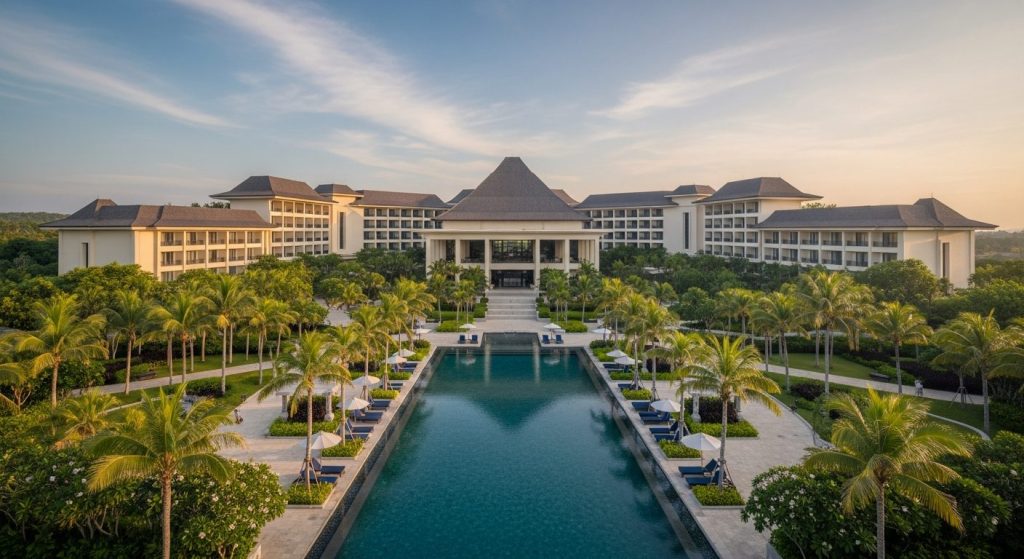
**Mandalika hotel resort investment** involves acquiring, developing, or operating hospitality assets within the Mandalika Special Economic Zone (SEZ) in Central Lombok, Indonesia. This segment of the Mandalika market focuses on catering to a diverse range of domestic and international visitors, aligning with the Indonesia Tourism Development Corporation (ITDC)’s master plan for the region. As Property & Investment Editor for Mandalika Invest Guide, my role is to provide clear, research-based information on this investment landscape, offering context rather than recommendations.
The Mandalika SEZ is designated for tourism development, with a strategic focus on high-value hospitality assets. Understanding the dynamics of **invest mandalika hotel resort** requires an examination of ITDC’s infrastructure development, the projected visitor numbers, and the specific regulatory environment governing foreign and domestic capital within the zone. This guide aims to map the key aspects of **mandalika hospitality investment**, including the spectrum of opportunities available, indicative cost structures, the operational framework, and an honest assessment of potential returns and associated risks.
The Mandalika Investment Landscape: A Strategic Overview
The Mandalika Special Economic Zone spans approximately 1,175 hectares on the southern coast of Lombok. Developed and managed by the state-owned Indonesia Tourism Development Corporation (ITDC), its strategic objective is to transform the region into a global tourism destination, often described as a “new Bali” for its focus on integrated resorts, sports tourism, and eco-conscious development.
ITDC’s Vision and the 20,000-Room Target
ITDC’s master plan for Mandalika delineates specific zones for resort development, residential areas, commercial spaces, and public facilities. A critical component of this plan is the ambitious target to develop approximately 20,000 hotel rooms across various categories. This **mandalika 20000 rooms hospitality investment trend** signifies a substantial demand projection and a long-term commitment to hospitality infrastructure expansion. The target is not merely a number; it represents the anticipated scale required to accommodate projected visitor growth, driven by both leisure tourism and major events. The development is designed to be phased, responding to market demand and infrastructure readiness. Current operational capacity is significantly lower than this target, indicating substantial room for new development.
The Role of the Mandalika International Street Circuit
The Mandalika International Street Circuit is a cornerstone of the SEZ’s strategy, positioning Mandalika as a premier sports tourism destination. Hosting events like the MotoGP has brought global attention and significantly increased visitor numbers during event periods. This circuit’s presence directly impacts **mandalika hotel investment** and **mandalika resort investment** by:
* **Driving demand spikes:** Major events create concentrated periods of high occupancy and increased average daily rates (ADRs), particularly for hotels and resorts within close proximity to the circuit.
* **Enhancing brand visibility:** Global media coverage of events at the circuit raises the international profile of Mandalika, potentially attracting a broader base of long-term leisure and business tourists.
* **Stimulating infrastructure development:** The need to support large-scale events accelerates the development of roads, utilities, and other essential infrastructure that benefits all hospitality assets in the zone.
While event-driven demand is significant, ITDC’s broader strategy aims to cultivate year-round tourism through diverse attractions, including ecotourism, cultural experiences, and MICE (Meetings, Incentives, Conferences, and Exhibitions) facilities, ensuring that the **mandalika hospitality investment** is not solely reliant on motor racing.
Understanding Mandalika Hotel & Resort Investment Opportunities
The investment landscape within Mandalika offers a spectrum of opportunities, ranging from large-scale integrated resorts to smaller, specialized accommodations. Each segment caters to different market demands and presents distinct investment profiles.
Spectrum of Hospitality Assets
Investors considering **invest mandalika hotel resort** can explore several categories:
Luxury Resorts
Large-scale, full-service properties often operated by international brands. These typically feature extensive amenities, including multiple restaurants, spas, private beach access, and event facilities. Examples of such developments include the existing Pullman Lombok Mandalika Beach Resort and Novotel Lombok Resort & Villas. Future developments by global brands, such as the planned Royal Tulip and Paramount Lombok Resort & Residences, indicate a continued focus on this high-end segment. **Mandalika luxury resort development investment** often involves substantial capital outlay but targets a high-yield demographic, benefiting from brand recognition and sophisticated operational models.
Boutique Hotels
Smaller, often independently operated hotels that emphasize unique design, personalized service, and a distinct character. **Boutique hotel mandalika investment** can offer a more agile entry point, appealing to investors seeking a niche market or a more manageable scale of operation. These properties often cater to travelers looking for authentic experiences away from larger chains. While they may not have the same brand marketing power, their distinctiveness can command strong loyalty and competitive rates.
Eco-Resorts and Sustainable Tourism
With Lombok’s natural beauty, there is a growing emphasis on environmentally conscious development. **Mandalika eco-resort investment sustainable tourism** focuses on properties designed and operated with minimal environmental impact, often integrating local culture and materials. These resorts typically prioritize energy efficiency, water conservation, waste reduction, and community engagement. This segment aligns with global trends in sustainable travel and can attract a discerning clientele willing to pay a premium for responsible tourism. ITDC’s master plan includes green zones and emphasizes sustainable practices.
Wellness Resorts
An emerging trend globally, wellness resorts integrate health and well-being programs with accommodation. These properties might offer yoga, meditation, spa treatments, healthy cuisine, and holistic therapies. **Mandalika wellness resort investment opportunity** leverages Lombok’s serene environment, offering a retreat experience. This niche can attract visitors seeking restorative travel, potentially extending average stays and driving higher revenue per guest.
Branded Residences
These are residential units (villas, apartments) that are part of or adjacent to a luxury hotel or resort and are managed by the associated hotel brand. Owners typically have access to hotel amenities and services, and the units can often be placed in a rental pool when not in personal use. This offers a hybrid investment model, combining real estate ownership with potential rental income and professional management. The ITDC has indicated plans for such developments, aligning with the broader trend of integrated tourism zones.
Key Operating Models
The operational framework for **mandalika hotel resort investment** typically involves collaboration with ITDC as the master developer and land owner, and often with established hospitality brands.
* **Owner-Operator Model:** The investor develops and directly manages the property. This offers maximum control but requires significant in-house expertise in hotel operations, marketing, and human resources.
* **Third-Party Management Agreement:** The investor owns the property but contracts a professional hotel management company (often an international brand like Marriott, Accor, or Hyatt) to operate it. This provides access to global booking systems, brand standards, and operational expertise, typically in exchange for a management fee (base fee + incentive fee). The **Hyatt Saraya Bay Mandalika investment** (if it proceeds under a similar model) would be an example of a branded property leveraging a management agreement.
* **Lease Agreement:** The investor leases the land from ITDC (via HPL – Hak Pengelolaan) and develops the property, which they then operate or have managed.
* **Franchise Model:** Less common for large resorts, but possible for certain hotel brands where the owner operates the property under a brand’s license, adhering to specific standards while retaining more operational autonomy than a management agreement.
The choice of operating model significantly influences potential returns, risk exposure, and the level of direct involvement required from the investor.
Indicative Investment Costs and Financial Considerations
Understanding the financial parameters is critical for any **mandalika hotel investment cost** analysis. These figures are indicative and vary widely based on property type, size, brand standards, location within the SEZ, and prevailing market conditions. All figures mentioned are research-based and should be verified with licensed financial and property advisors, last verified June 2026.
Land Acquisition & Lease Structures
ITDC holds the Hak Pengelolaan (HPL) or Right to Manage over the land within the Mandalika SEZ. Investors typically acquire Hak Guna Bangunan (HGB) or Right to Build, leased from ITDC.
* **HGB Duration:** For foreign investment, HGB can be granted for an initial period of up to 30 years, extendable for another 20 years, and renewable for an additional 30 years, totaling up to 80 years. This long-term tenure provides security for significant capital investments.
* **Lease Rates:** Land lease rates vary based on location, parcel size, and designated use within the master plan. Indicative lease rates for prime hospitality land in Mandalika have been observed to range from USD 50-150 per square meter per year. These rates are subject to negotiation with ITDC and typically involve an upfront payment for the initial HGB term.
Development and Construction Costs
The cost of developing a hotel or resort is highly variable. Factors include:
* **Property Type:** A luxury five-star resort will have substantially higher per-key costs than a mid-scale boutique hotel.
* **Key Count:** Larger properties may benefit from economies of scale in certain aspects but also incur higher overall costs.
* **Brand Standards:** International brands often impose specific design, material, and amenity standards that can increase costs.
* **Site Conditions:** Land preparation, foundation work, and infrastructure connections can vary depending on the specific plot.
* **Materials and Labor:** Costs for construction materials and skilled labor in Lombok.
* **Permits and Fees:** Various regulatory permits and fees associated with construction within the SEZ.
Based on industry research and comparable projects in Southeast Asia, indicative per-key development costs (excluding land) for **mandalika hotel investment cost** can be generalized:
* **Boutique Hotels (3-4 star equivalent):** USD 80,000 – USD 150,000 per key
* **Luxury Resorts (4-5 star equivalent):** USD 180,000 – USD 400,000+ per key
* **Eco/Wellness Resorts:** Often fall within the luxury range due to specialized facilities and sustainable design requirements.
These figures typically include construction, FF&E (furniture, fixtures, and equipment), operating supplies, pre-opening expenses, and project management fees. Investors should secure detailed feasibility studies and cost estimates from licensed consultants for precise budgeting.
Operational Expenses and Revenue Projections
Post-development, ongoing operational expenses must be factored into the financial model. These include:
* **Staffing:** Wages, benefits, and training for hotel personnel.
* **Utilities:** Electricity, water, waste management.
* **Maintenance:** Property upkeep, repairs, and preventative maintenance.
* **Marketing & Sales:** Brand promotion, distribution channel fees, and sales initiatives.
* **Management Fees:** If operating under a third-party management agreement (typically 3-5% of gross revenue + incentive fees).
* **Insurance:** Property, liability, and other operational insurance.
* **Property Taxes:** Local taxes and levies.
Revenue projections for **mandalika hotel resort investment roi** are based on anticipated occupancy rates, average daily rates (ADR), and revenue per available room (RevPAR). These are influenced by:
* **Market Demand:** Overall tourism growth in Lombok and specific segments targeted.
* **Competition:** The supply of similar properties in the area.
* **Brand Strength:** The ability of a recognized brand to attract guests and command higher rates.
* **Seasonality:** Peak seasons (e.g., MotoGP, holidays) versus off-peak periods.
* **Event Calendar:** The schedule of major events at the Mandalika International Street Circuit.
A realistic financial model should incorporate conservative projections for occupancy and ADR, especially during the initial years of operation, and account for potential market fluctuations.
- Indicative Mandalika Hotel Development Cost Breakdown (Excluding Land Lease)
- (Last verified June 2026, figures are approximate ranges for new construction)
- Building & Infrastructure (Shell & Core)
- 40-55% of total development cost. Includes structural work, roofing, exterior finishes, basic utilities infrastructure.
- Interior Finishes, FF&E (Furniture, Fixtures & Equipment)
- 25-35% of total development cost. Includes interior walls, flooring, lighting, bathroom fixtures, beds, seating, dining equipment, kitchen appliances, and guestroom amenities.
- Soft Costs (Design, Consultancy, Permits, Pre-Opening)
- 10-15% of total development cost. Includes architectural fees, engineering fees, legal fees, permits, licenses, marketing, staff training, and initial operating supplies.
- Contingency
- 5-10% of total development cost. Essential for unforeseen expenses, delays, or changes during construction.
- Example Per-Key Cost (Luxury Resort)
- USD 250,000 – USD 400,000+ per key, excluding land. This figure can escalate significantly for ultra-luxury or highly specialized properties.
Tax Incentives and Regulatory Framework for Mandalika Hospitality Investment
One of the primary advantages of investing in the Mandalika SEZ is the package of incentives designed to attract both domestic and foreign capital. These incentives are granted under Indonesia’s Special Economic Zone regulations, specifically Government Regulation No. 12/2020.
Fiscal Incentives
Fiscal incentives aim to reduce the tax burden on investors:
* **Corporate Income Tax (CIT) Reduction:** Investors may be eligible for a reduction in corporate income tax for a certain period, depending on the investment value and sector. This can range from 10% to 100% reduction for 10 to 25 years, followed by a further 50% reduction for two years. Specific conditions apply and are subject to verification with the Investment Coordinating Board (BKPM).
* **Import Duty and Tax Exemptions:** Exemption from import duties and import-related taxes (like VAT and PPh 22) on capital goods (machinery, equipment) used for construction, development, and expansion of projects within the SEZ. This significantly reduces the initial capital outlay for development.
* **Value Added Tax (VAT) Exemption:** Potential VAT exemptions for goods and services utilized in the SEZ, particularly for certain activities or transactions.
* **Luxury Goods Sales Tax Exemption:** Exemptions for certain luxury goods used in the development of tourism facilities.
Non-Fiscal Advantages
Beyond tax benefits, investors in Mandalika SEZ benefit from:
* **Streamlined Licensing and Permits:** The OSS (Online Single Submission) system through BKPM aims to simplify and expedite the process of obtaining business licenses and permits. ITDC also plays a role in facilitating these processes within the SEZ.
* **Land Use Rights:** As discussed, the ability to obtain long-term HGB rights for up to 80 years provides substantial security for large-scale investments.
* **Infrastructure Support:** ITDC is responsible for developing core infrastructure within the SEZ, including roads, utilities (water, electricity), and waste management systems, reducing the burden on individual investors.
* **Dedicated Management Body:** The SEZ is managed by a dedicated administrator, which can provide a more coordinated and supportive environment for investors compared to conventional areas.
Land Rights and Ownership for Foreign Investors
Foreign investors cannot directly own freehold land (Hak Milik) in Indonesia. However, the HGB (Hak Guna Bangunan – Right to Build) title, leased from ITDC (which holds HPL – Hak Pengelolaan), provides a secure and long-term right to construct and operate buildings. This is the most common and secure form of land tenure for foreign entities undertaking **mandalika luxury resort development investment** or any other property development in Indonesia. The 80-year potential tenure (30+20+30) allows for amortization of significant capital investments and long-term business planning. It is crucial to engage licensed legal counsel specializing in Indonesian property law to navigate the intricacies of land titles and lease agreements.
Who Can Invest in Mandalika Hotel & Resort Projects?
The Indonesian government actively encourages both domestic and foreign direct investment (FDI) in its Special Economic Zones, including Mandalika.
Foreign Direct Investment (FDI) Framework
Foreign entities can invest in Indonesian hospitality projects, including **invest mandalika hotel resort**, primarily through establishing a Foreign Investment Limited Company (PT PMA – Perseroan Terbatas Penanaman Modal Asing).
* **PT PMA:** This legal entity allows foreign investors to own 100% of the shares in a company operating in eligible sectors, subject to the Negative Investment List (Daftar Negatif Investasi or DNI, which has been largely relaxed under recent Omnibus Law changes). Hospitality is generally an open sector for foreign investment.
* **Minimum Investment Capital:** Indonesian regulations typically stipulate a minimum investment capital for PT PMAs, often around IDR 10 billion (approximately USD 650,000, subject to exchange rate fluctuations). This threshold ensures that foreign investors are committed to substantial projects.
* **Business Classification:** The specific activities of the hotel or resort will need to be registered under the appropriate KBLI (Klasifikasi Baku Lapangan Usaha Indonesia – Indonesian Standard Industrial Classification) codes, which are used for business licensing.
Local Partnerships and Joint Ventures
While 100% foreign ownership is generally permitted in the hospitality sector, some investors may choose to enter into joint ventures (JVs) with local Indonesian partners.
* **Benefits of JVs:** Local partners can offer valuable insights into the local market, cultural nuances, regulatory landscape, and access to local networks and resources. This can be particularly beneficial for **boutique hotel mandalika investment** or projects that aim for deep integration with local communities and supply chains.
* **Structure:** A JV can take various forms, including a joint PT PMA where both foreign and local entities hold shares, or a contractual partnership. The specifics should be carefully structured with legal advice.
Regardless of the investment structure, compliance with Indonesian corporate law, labor law, and environmental regulations is paramount. Engaging local legal and business consultants early in the process is advisable.
Evaluating Pros and Cons of Mandalika Hotel & Resort Investment
Like any significant capital deployment, **mandalika hotel resort investment** presents both compelling opportunities and inherent risks. A balanced perspective is essential for informed decision-making.
Potential Advantages
* **Government Support and Strategic Focus:** Mandalika is a national strategic project with strong government backing, evident in ITDC’s role, infrastructure development, and the SEZ incentive package. This reduces certain types of political and regulatory risk.
* **Growing Tourism Market:** Lombok, while less developed than Bali, is experiencing increasing visitor numbers. The presence of the MotoGP circuit and improving connectivity (Lombok International Airport) contribute to this growth.
* **Diversified Demand Drivers:** Beyond sports tourism, Mandalika is being positioned for eco-tourism, cultural tourism, and MICE, aiming for year-round demand. This supports the **mandalika eco-resort investment sustainable tourism** trend.
* **Attractive Incentives:** The fiscal and non-fiscal incentives offered within the SEZ can significantly improve project economics and reduce the cost of capital.
* **Long-Term Land Tenure:** The availability of HGB for up to 80 years provides long-term security for substantial investments.
* **Untapped Potential:** Compared to more mature markets, Mandalika still offers opportunities for pioneering projects and establishing a strong market position. This is particularly relevant for specialized segments like **mandalika wellness resort investment opportunity**.
Potential Risks and Challenges
* **Infrastructure Development Pace:** While ITDC is developing infrastructure, the pace of certain ancillary developments (e.g., local transportation, skilled labor housing, retail offerings) may lag behind resort construction, impacting guest experience and operational efficiency.
* **Market Volatility and Seasonality:** Tourism markets are susceptible to global economic downturns, health crises, and geopolitical events. Event-driven demand (like MotoGP) can lead to high seasonality, with troughs outside major events impacting consistent occupancy and revenue.
* **Competition:** As more properties open, competition for guests will intensify, potentially impacting ADRs and occupancy rates.
* **Environmental and Social Impact:** Large-scale development carries environmental risks and potential impacts on local communities. While ITDC emphasizes sustainability, investors must ensure their projects adhere to best practices and local regulations to avoid reputational damage and operational hurdles.
* **Regulatory Complexity:** While SEZs offer streamlined processes, navigating Indonesian legal and regulatory frameworks still requires specialized expertise. Changes in government policy or interpretation can occur.
* **Land Contestation:** Though ITDC holds HPL, historical land claims can sometimes emerge, requiring careful due diligence and legal counsel.
* **Labor Availability and Skill Gaps:** Recruiting and retaining skilled hospitality staff can be a challenge in emerging destinations. Investment in training and fair labor practices is crucial.
ROI Considerations: A Research Perspective
Discussing **mandalika hotel resort investment roi** requires a nuanced, research-based approach, as specific figures are highly project-dependent.
* **Yield Expectations:** Investors in new hospitality developments in emerging markets typically seek higher yields than in mature markets to compensate for higher perceived risk and longer stabilization periods. Indicative gross rental yields for operational hotels in similar Indonesian markets can range from 6-12% annually, but this is highly variable based on operational efficiency, brand, and market conditions. For a new development, the focus is often on projected IRR (Internal Rate of Return) over the project lifecycle, which can range from high teens to low twenties for successful ventures. These are not guaranteed returns.
* **Capital Appreciation:** Beyond operational income, potential capital appreciation of the asset over time is a significant component of overall ROI. This is driven by market maturity, infrastructure development, and sustained tourism growth.
* **Due Diligence:** Robust financial modeling, market feasibility studies, and environmental impact assessments are critical. Engaging licensed financial analysts and property consultants is essential to develop realistic projections for revenue, costs, and ultimately, ROI. No investment is without risk, and there are no guaranteed returns. All projections should be treated as indicative and verified by independent professionals.
Steps to Investing in Mandalika Hospitality
For those considering **how to invest in mandalika hotels**, a structured approach is recommended:
1. **Initial Research and Market Assessment:** Understand the overall market, ITDC’s master plan, and specific hospitality segments. This guide provides a starting point.
2. **Define Investment Objectives:** Clarify your investment size, desired asset class (e.g., **mandalika luxury resort development investment**, **boutique hotel mandalika investment**), risk appetite, and time horizon.
3. **Engage Licensed Professionals:**
* **Legal Counsel:** For entity establishment (PT PMA), land lease agreements (HGB), and regulatory compliance.
* **Financial Advisors:** For feasibility studies, financial modeling, and tax planning.
* **Property Consultants:** For site selection, market analysis, and property valuation.
* **Architects & Developers:** For design, engineering, and construction management.
4. **Site Identification and Due Diligence:** Work with property consultants to identify suitable land parcels within the SEZ. Conduct thorough legal, environmental, and technical due diligence on the chosen site.
5. **Secure Land Rights:** Negotiate and secure a HGB lease agreement with ITDC.
6. **Formulate Business Plan & Secure Funding:** Develop a comprehensive business plan including financial projections, operational strategy, and funding sources.
7. **Establish Legal Entity:** Register your PT PMA with BKPM and obtain necessary business licenses through the OSS system.
8. **Design & Permitting:** Obtain architectural designs, engineering plans, and all required building permits from relevant authorities within the SEZ.
9. **Construction & Development:** Oversee the construction phase, adhering to timelines, budget, and quality standards.
10. **Pre-Opening & Operations:** Recruit and train staff, set up operational systems, and launch the property.
—
Considering **mandalika hotel resort investment** requires careful planning and access to accurate information. If you are ready to explore specific opportunities or need to connect with licensed professionals who can provide tailored advice, we can help facilitate those connections.
Ready to explore investment pathways?
Plan your trip with our team for initial guidance, or reach out via WhatsApp for a direct discussion.
—
FAQs about Mandalika Hotel & Resort Investment
What is the role of ITDC in Mandalika hotel and resort investment?
ITDC (Indonesia Tourism Development Corporation) is the master developer and land owner (holding Hak Pengelolaan or HPL) within the Mandalika SEZ. They are responsible for developing core infrastructure, managing the SEZ, and granting land lease rights (HGB) to investors. ITDC also plays a key role in attracting and facilitating investment, overseeing the overall master plan, and ensuring compliance with SEZ regulations.
Can foreigners own land for hotel development in Mandalika?
Foreigners cannot directly own freehold land (Hak Milik) in Indonesia. However, foreign investors can obtain Hak Guna Bangunan (HGB) or Right to Build title over land leased from ITDC. This HGB right provides secure, long-term tenure, typically for an initial 30 years, extendable for 20 years, and renewable for another 30 years, totaling up to 80 years. This allows foreign entities to construct and operate hotel and resort properties.
What kind of tax incentives are available for Mandalika hospitality investment?
Investors in the Mandalika SEZ may be eligible for various fiscal incentives, including corporate income tax reductions, exemptions from import duties and import-related taxes (VAT, PPh 22) on capital goods, and potential VAT exemptions on certain goods and services within the SEZ. The specific incentives depend on the investment value, sector, and duration, and are regulated by Government Regulation No. 12/2020. These benefits aim to reduce initial capital outlay and improve long-term profitability. It is important to consult a licensed tax advisor for detailed information applicable to your specific project.
What is the typical ROI for Mandalika hotel resort investment?
The return on investment (ROI) for **mandalika hotel resort investment** is highly variable and depends on numerous factors, including the type of property (e.g., luxury resort vs. boutique hotel), operational efficiency, market conditions, initial investment cost, and management strategy. While general research suggests that hospitality investments in emerging markets might target higher IRRs (Internal Rates of Return) than mature markets, there are no guaranteed returns. Realistic projections require comprehensive market feasibility studies, financial modeling, and due diligence by licensed professionals. These are indicative figures for research and context, not a recommendation or guarantee.
How does the MotoGP circuit impact hotel and resort demand in Mandalika?
The Mandalika International Street Circuit significantly impacts demand by driving high-volume visitor traffic during major events like MotoGP races. This leads to concentrated periods of high occupancy and increased average daily rates (ADRs) for hotels and