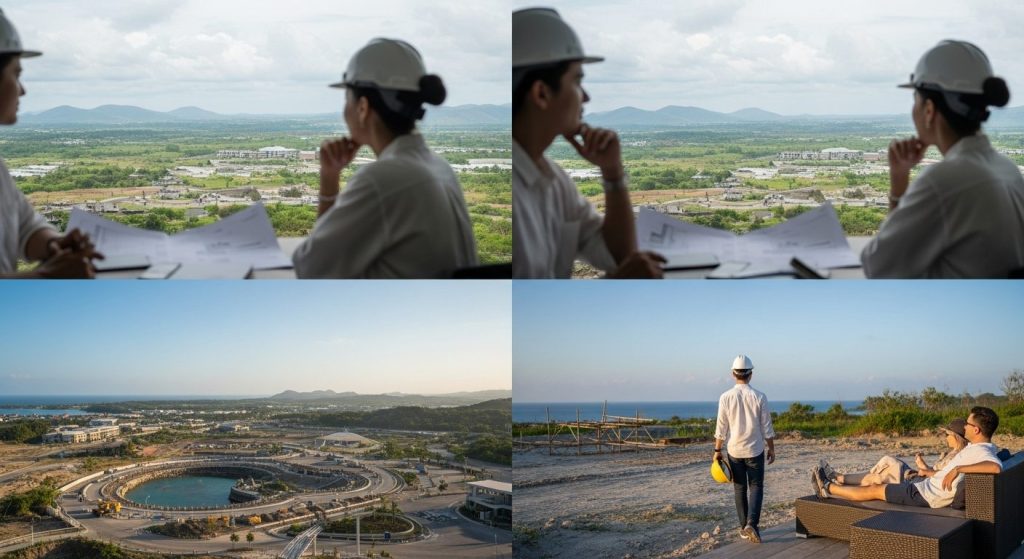
The process for a **foreigner to invest in Mandalika, Lombok**, primarily involves establishing a **PT PMA** ( *Perseroan Terbatas Penanaman Modal Asing*, or Foreign-Owned Limited Company) and navigating the Indonesian government’s **BKPM** (Investment Coordinating Board) and **OSS** (Online Single Submission) licensing system. This structure is the most common and legally sound pathway for foreign direct investment in the Mandalika Special Economic Zone (KEK Mandalika).
This guide provides general information on the structures and procedures for foreign investment in KEK Mandalika. It is not legal, tax, or immigration advice. Indonesian laws and regulations are subject to change. For specific circumstances, always consult a licensed Indonesian lawyer, notary, tax advisor, or immigration specialist.
Understanding the Mandalika Special Economic Zone (KEK Mandalika)
The Mandalika Special Economic Zone (KEK Mandalika) is located on the southern coast of Central Lombok, West Nusa Tenggara. Designated as a National Strategic Tourism Area (KSPN) and a Special Economic Zone, its development is aimed at boosting tourism and economic growth in the region. The Indonesia Tourism Development Corporation (ITDC), a state-owned enterprise, acts as the master developer for the area, overseeing infrastructure, land management, and strategic partnerships.
The KEK Mandalika status grants specific fiscal and non-fiscal incentives designed to attract both domestic and foreign investment, particularly in tourism, hospitality, and related services. Its profile has significantly risen with the development of the Mandalika International Street Circuit, which hosts international motorsport events like MotoGP, drawing substantial attention and visitors to the area.
The Primary Vehicle: PT PMA (Foreign-Owned Limited Company)
For most foreign investment activities in Indonesia, including those within KEK Mandalika, establishing a PT PMA is the required legal entity. A PT PMA allows foreign individuals or entities to own shares in an Indonesian company, thereby conducting business operations and holding certain assets under Indonesian law. This structure is essential for activities such as operating hotels, villas, resorts, tourism services, and property development projects.
Minimum Capital Requirements for PT PMA
Indonesian regulations set out specific minimum capital requirements for PT PMAs. While the actual paid-up capital can be lower, the stated investment plan often needs to be substantial:
* **Investment Plan Value:** Generally, a PT PMA must state an investment plan value of at least IDR 10 billion (approximately USD 650,000, depending on exchange rates). This figure represents the total planned investment, not necessarily the cash to be deposited upfront.
* **Paid-up Capital:** Of the IDR 10 billion investment plan, at least IDR 2.5 billion (approximately USD 160,000) is typically required as paid-up capital. This amount must be demonstrably deposited into the company’s bank account.
These figures are general guidelines for most sectors open to foreign investment. There can be exceptions for specific types of businesses (e.g., certain digital startups), but for significant investments in hospitality or property development in Mandalika, these thresholds are generally applicable. It is critical to confirm the specific requirements based on your chosen business activities (KBLI codes) at the time of application.
Shareholding Structure and Local Partners
In many sectors open to foreign investment, a PT PMA can be 100% foreign-owned. This means foreign investors can hold all shares without requiring an Indonesian co-owner. However, this depends entirely on the specific business classification (KBLI code) and the prevailing investment regulations, as outlined in the Presidential Regulation No. 10/2021 concerning the Investment Priority List (DPI), which replaced the Negative Investment List (DNI).
While 100% foreign ownership is possible in many tourism and hospitality sub-sectors, some investors may choose to collaborate with local partners for strategic reasons, such as navigating local customs, understanding market nuances, or leveraging existing networks. This is a business decision rather than a legal requirement in most cases for the relevant sectors in Mandalika.
Permitted Business Activities (KBLI Codes)
The Indonesian Standard Industrial Classification (KBLI, *Klasifikasi Baku Lapangan Usaha Indonesia*) is a comprehensive system used to classify business activities. Every company in Indonesia, including PT PMAs, must register with specific KBLI codes that accurately reflect its intended business operations.
For **foreign investment in Mandalika**, selecting the correct KBLI codes is crucial because:
* **Permissibility:** Each KBLI code has specific rules regarding foreign ownership, minimum capital, and licensing requirements. Incorrect codes can lead to delays or rejection of permits.
* **Licensing:** Your KBLI codes determine the types of operational licenses (Izin Usaha) and permits your PT PMA will need from the OSS system.
* **Incentives:** Eligibility for KEK Mandalika’s tax incentives and facilities is often tied to specific KBLI codes that align with priority sectors (e.g., tourism, hospitality, creative industries).
Common KBLI codes relevant for Mandalika investors include those for:
* Hotels (e.g., 55110 – Hotels with Star Classification)
* Villas and Apartments (e.g., 55130 – Other Accommodation Services)
* Restaurants (e.g., 56101 – Restaurants)
* Tourism Development (e.g., 68130 – Real Estate for Tourism)
* Other tourism support services.
Verify the current KBLI classification for your intended business with a legal professional before formalizing your PT PMA setup.
Navigating BKPM and OSS Licensing for Mandalika Investments
The Indonesian government has streamlined the business licensing process through the **Online Single Submission (OSS) system**, managed by the **Investment Coordinating Board (BKPM)**. This platform serves as the central hub for applying for and managing business permits. All PT PMAs investing in Mandalika must use the OSS system.
Key Stages of OSS Licensing
The OSS system generally involves several stages for obtaining the necessary permits to operate a **foreign owned company hotel villa Mandalika**:
Stage 1: NIB (Nomor Induk Berusaha – Business Identification Number)
The NIB is the foundational permit for any business in Indonesia. It serves multiple functions:
* **Company Registration:** It acts as your company’s registration certificate.
* **Importer Identification Number (API):** For businesses involved in imports.
* **Customs Access:** Provides access to customs services.
* **Business License (Izin Usaha) Commitment:** The NIB signifies a commitment to fulfill the requirements for specific operational licenses.
Obtaining an NIB is the first step after your PT PMA is formally established (deed of establishment, Ministry of Law and Human Rights approval, tax registration). The process is generally fast if all company documents are in order.
Stage 2: Standard Certificates and Permits (Izin Usaha)
After obtaining the NIB, your PT PMA needs to fulfill commitments for specific operational licenses, known as *Izin Usaha* (Business Permits) or *Sertifikat Standar* (Standard Certificates). These permits are categorized based on their risk level (low, medium, high) and KBLI codes:
* **Low-Risk Businesses:** May only require an NIB to operate.
* **Medium-Risk Businesses:** Require an NIB and *Sertifikat Standar* (Standard Certificate). These certificates are issued based on self-declaration of compliance with relevant standards and regulations, but can be subject to later verification by authorities.
* **High-Risk Businesses:** Require an NIB, *Sertifikat Standar*, and a full *Izin Usaha* (Business Permit). This often involves a more thorough verification process, inspections, and approvals from relevant ministries or regional agencies (e.g., tourism, environmental).
For **pt pma company setup lombok hotel investment** and villa operations, the business activities typically fall under medium to high-risk categories, requiring more than just an NIB.
Stage 3: Operational & Commercial Permits
These permits are required once construction is complete and before the business officially commences operations. They confirm that the physical establishment meets all safety, technical, and operational standards. Examples include:
* **Operational Licenses:** Specific permits required for hotels, resorts, or villas to legally host guests.
* **Commercial Licenses:** For activities like selling food and beverages, spa services, etc.
Specific Requirements for Hotel/Villa Investment
For **mandalika bkpm oss licensing** for hotel and villa developments, several key permits and approvals are necessary:
* **Persetujuan Bangunan Gedung (PBG):** This is the Building Approval Permit, which replaced the older Izin Mendirikan Bangunan (IMB). It verifies that your building plans comply with local zoning, safety, and architectural regulations.
* **Environmental Permits (UKL-UPL/AMDAL):** Depending on the scale and potential environmental impact of your project, you will need either an *Upaya Pengelolaan Lingkungan Hidup dan Upaya Pemantauan Lingkungan Hidup* (UKL-UPL – Environmental Management and Monitoring Efforts) or an *Analisis Mengenai Dampak Lingkungan* (AMDAL – Environmental Impact Assessment). These are critical for sustainable development and compliance.
* **Tourism Business License (TDUP):** The *Tanda Daftar Usaha Pariwisata* is mandatory for all tourism-related businesses, including hotels, villas, and tour operators. It certifies that your business meets tourism standards.
* **Fire Safety Certificate:** Issued after inspection, ensuring the building meets fire safety standards.
* **Other Technical Permits:** Depending on the specifics of your facility, additional permits related to water management, waste disposal, electricity, and telecommunications may be required.
Navigating these permits requires careful planning and often the assistance of local consultants who understand the nuances of regional regulations and the OSS system.
Land Rights for Foreign Investors in Mandalika
Understanding land rights is paramount for **how foreigners invest Mandalika Lombok** in property. A crucial point is that foreign individuals and foreign-owned companies (PT PMA) **cannot own freehold land (Hak Milik)** in Indonesia. This is a constitutional principle. Any claims or offers suggesting direct freehold ownership for foreigners should be treated with extreme caution, as they often involve illegal nominee arrangements that carry significant risks.
Instead, foreign investors and PT PMAs typically acquire land rights through Hak Pakai or long-term leasehold agreements.
Hak Pakai (Right to Use) for PT PMA
*Hak Pakai* (Right to Use) is the strongest land title available to a PT PMA or a foreign individual in Indonesia. It grants the holder the right to use and/or collect produce from state land or land with *Hak Pengelolaan* (Right to Manage) for a specified period.
* **Direct Right:** It is a direct right from the state (or from a Hak Pengelolaan holder like ITDC in KEK Mandalika), registered with the National Land Agency (BPN).
* **Term:** A Hak Pakai title is typically granted for an initial period of 30 years, extendable for another 20 years, and renewable for a further 30 years. This provides a total potential tenure of up to 80 years.
* **Transferability:** Hak Pakai can generally be transferred, mortgaged, or used as collateral.
* **Purpose:** It allows the holder to construct buildings and operate a business.
For significant developments like hotels or large villa complexes within KEK Mandalika, PT PMAs will often seek Hak Pakai titles directly from ITDC, which holds the Hak Pengelolaan over much of the land within the zone.
Leasehold Agreements
Leasehold is another common method for foreigners and PT PMAs to gain access to land. This involves a contractual agreement with a Hak Milik (freehold) owner to use their land for a specified period.
* **Contractual Basis:** Unlike Hak Pakai, a leasehold is a private contract between two parties (the lessor and the lessee), not a direct land right issued by the state.
* **Term:** Lease agreements typically range from 25 to 30 years, often with options for extension at the end of the initial term.
* **Flexibility:** Lease terms are highly flexible and depend on negotiations between the parties.
* **Risk:** The security of a leasehold depends entirely on the terms of the contract and the reliability of the lessor. It is crucial to conduct thorough due diligence on the lessor and the underlying land title.
Many smaller villa investments or individual property developments in Mandalika may utilize leasehold agreements, particularly if they are not directly acquiring land from ITDC or a developer with Hak Pakai.
Comparison: Hak Pakai vs. Leasehold
Understanding the differences between these two land rights is essential for **hak pakai vs leasehold foreigner lombok**:
| Feature | Hak Pakai (Right to Use) | Leasehold (Sewa) |
| :—————- | :——————————————————— | :———————————————————- |
| **Legal Basis** | Direct land right from the state/Hak Pengelolaan holder. Registered with BPN. | Private contractual agreement with a Hak Milik owner. |
| **Term (Typical)**| Initial 30 years, extendable 20 years, renewable 30 years (total 80 years). | Typically 25-30 years, with options for extension. |
| **Security** | Stronger, government-recognized land title. Can be collateral. | Depends on contract terms and lessor’s reliability. |
| **Holder** | PT PMA, Indonesian citizens, some foreign individuals. | Any individual or entity. |
| **Cost** | Government fees for issuance/extension; land premium. | Agreed rental payments; one-time or periodic. |
| **Transfer** | Generally transferable (with BPN process). | Transferability depends on lease agreement terms. |
| **Suitability** | Larger developments, long-term strategic investments. | Smaller properties, shorter-term use, or specific projects. |
Why Foreigners Cannot Own Hak Milik
The prohibition of foreign ownership of *Hak Milik* (Freehold Title) is enshrined in Article 33 of the Indonesian Constitution and the Basic Agrarian Law of 1960. *Hak Milik* is reserved exclusively for Indonesian citizens. This regulation aims to protect national sovereignty over land. Attempts to circumvent this rule through nominee agreements (e.g., using an Indonesian citizen to hold title on behalf of a foreigner) are illegal, carry severe legal risks, and can result in the loss of all investment without recourse. Always structure your land acquisition through legally compliant channels like Hak Pakai or a properly drafted lease agreement with your PT PMA.
KEK Mandalika Tax Incentives and Facilities
One of the primary advantages of **foreign investment Mandalika** within the KEK is access to specific fiscal and non-fiscal incentives. These facilities are designed to make investment more attractive and foster economic growth in the designated zone.
Income Tax Facilities
Investors in KEK Mandalika may be eligible for:
* **Tax Holiday (Income Tax Reduction):** This incentive provides a reduction in corporate income tax for a certain period. The duration and percentage of the reduction depend on the investment value and the specific business sector, with higher investments and priority sectors potentially receiving up to 100% tax reduction for many years.
* **Tax Allowance:** For companies that do not qualify for a full tax holiday, a tax allowance may be available. This can include:
* Net income reduction of 30% for six years (5% per year).
* Accelerated depreciation of tangible and intangible assets.
* Reduced dividend tax for foreign taxpayers of 10% or according to the prevailing Double Taxation Avoidance Agreement (DTAA).
Value Added Tax (VAT) and Luxury Goods Sales Tax (LST) Exemptions
Within KEK Mandalika, investors may benefit from exemptions or deferrals on:
* **VAT Exemption:** For the import of capital goods (e.g., machinery, construction materials) and raw materials directly used for investment activities within the KEK. Certain services provided within the KEK may also be exempt from VAT.
* **LST Exemption:** For the import of certain luxury goods into the KEK, depending on their intended use within the investment project.
Customs and Excise Facilities
To facilitate the import of necessary equipment and materials for development, KEK Mandalika offers:
* **Import Duty Exemption:** For the import of capital goods, raw materials, and components that are not produced domestically or are insufficient in quantity for the KEK’s development and operation.
* **Non-Collection of Import Duty, Excise, and Taxes:** For goods brought into the KEK from outside customs areas, provided they are used for eligible activities.
Other Potential Benefits
Beyond the fiscal incentives, KEK Mandalika also offers non-fiscal advantages, such as:
* **Simplified Licensing:** A dedicated KEK administration aims to streamline permit processing, often coordinating with central and regional authorities.
* **Infrastructure Support:** The government and ITDC are committed to developing robust infrastructure within the zone, including roads, utilities, and telecommunications.
Eligibility for these incentives is not automatic. Investors must apply to the relevant authorities (BKPM, Ministry of Finance) and meet specific criteria related to investment value, KBLI codes, and local content requirements. The details of these incentives can also change, so **mandalika foreigner investment regulations** must be verified with current regulations and a qualified tax advisor.
Investor Visas and Residency for Foreign Investors in Mandalika
For **mandalika investment visa requirements**, foreign investors intending to reside in Indonesia and manage their PT PMA must obtain the appropriate visas and stay permits. Indonesia offers several options tailored for investors.
C313 (Limited Stay Visa for Investment)
This visa is designed for foreign investors who are establishing or managing a PT PMA with a significant capital commitment.
* **Requirements:** Generally requires proof of PT PMA establishment, capital commitment (e.g., IDR 10 billion investment plan, IDR 2.5 billion paid-up capital), and a position as a director or commissioner in the PT PMA.
* **Validity:** Typically granted for an initial period of one year.
* **Extensions:** Can be extended annually for up to a total of five years, after which it may be converted to a permanent stay permit (KITAP).
C314 (Limited Stay Visa for Investment – Longer Term)
The C314 visa is a more recent option, offering a longer initial stay for higher investment amounts.
* **Requirements:** Similar to C313, but usually requires a higher minimum investment value (e.g., often IDR 25 billion or more, verify current regulations) for the PT PMA.
* **Validity:** Can be granted for an initial period of two years.
* **Extensions:** Can be extended for subsequent periods, potentially offering a quicker path to KITAP for long-term **foreign investor Mandalika PT PMA requirements**.
KITAS/KITAP (Temporary/Permanent Stay Permit)
Once an investor enters Indonesia with a C313 or C314 visa, it is converted into a **KITAS** (*Kartu Izin Tinggal Terbatas*, Temporary Stay Permit).
* **KITAS:** This is the actual residency permit that allows the investor to live and work in Indonesia for the duration of their visa. It is linked to their PT PMA.
* **KITAP:** After holding a KITAS for a certain period (typically three to five consecutive years, depending on the visa type and specific regulations), eligible investors may apply for a **KITAP** (*Kartu Izin Tinggal Tetap*, Permanent Stay Permit). A KITAP offers longer-term residency (typically five years, renewable) and simplifies many administrative processes.
It is crucial to engage with a licensed Indonesian immigration consultant to ensure compliance with all visa and stay permit regulations, as these can be complex and subject to frequent changes.
Essential Considerations and Risks for Foreign Investors
Investing in any emerging market, including Mandalika, comes with specific considerations and potential risks. An honest assessment is part of making informed decisions.
* **Regulatory Changes:** Indonesian investment laws and regulations can change, sometimes with short notice. Staying informed and consulting legal professionals is vital.
* **Due Diligence:** Thorough due diligence on land titles, local partners, and regulatory compliance is indispensable to mitigate risks. Verifying the legitimacy of land ownership and ensuring clear Hak Pakai or leasehold terms is critical.
* **Infrastructure Pace:** While the government is investing heavily in Mandalika’s infrastructure, the pace of development for all necessary utilities and services might not always match investor expectations, particularly in nascent areas.
* **Environmental Impact:** All developments must comply with stringent environmental regulations (UKL-UPL/AMDAL). Non-compliance can lead to significant delays, fines, or project abandonment.
* **Local Community Engagement:** Respectful and effective engagement with local communities is essential for smooth operations and long-term success. Understanding local customs and managing expectations can prevent misunderstandings.
* **Market Volatility:** The tourism market is susceptible to global economic conditions, travel restrictions, and regional competition.
* **Currency Fluctuations:** Investments are exposed to changes in the Indonesian Rupiah (IDR) exchange rate against foreign currencies.
This guide provides general information about **foreigner invest Mandalika Lombok pt pma**. For specific guidance tailored to your unique investment goals, we encourage you to consult with qualified professionals. Our aim is to provide clarity, not to replace expert advice.
Plan your trip to Mandalika with a solid understanding of the investment landscape. We can help you identify qualified professionals for further consultation via WhatsApp.
Next Steps: Consulting Licensed Professionals
The information presented here is for general guidance and research purposes only. It is not legal, financial, tax, or immigration advice and should not be relied upon as such. Indonesian laws, regulations, and their interpretations are complex and subject to change. Every investment case is unique and requires specific verification.
Before making any investment decisions or taking any action, you *must* consult with:
* **A licensed Indonesian Notary (Notaris):** For company establishment, shareholding, and deed verification.
* **A licensed Indonesian Lawyer:** For contract review, due diligence, land rights verification (PPAT), and general legal counsel.
* **A licensed Indonesian Tax Advisor:** For specific advice on tax incentives, compliance, and liabilities within KEK Mandalika.
* **A licensed Indonesian Immigration Consultant:** For up-to-date information on investor visas and stay permits.
* **Official BKPM/OSS Channels and ITDC Representatives:** For the most current information on investment regulations and opportunities within KEK Mandalika.
No one can pay to change what we publish; if you proceed with our partner they may pay us a referral fee at no extra cost to you.
FAQs
Can foreigners directly own land (Hak Milik) in Mandalika?
No, foreigners and foreign-owned companies (PT PMA) cannot directly own Hak Milik (freehold title) land in Indonesia, including within Mandalika. The strongest land right available to a PT PMA is Hak Pakai (Right to Use), which offers a long-term tenure of up to 80 years through initial grants, extensions, and renewals. Alternatively, foreign investors can enter into long-term leasehold agreements with Hak Milik owners.
What is the minimum investment for a PT PMA in Mandalika?
Generally, a PT PMA requires an investment plan of at least IDR 10 billion (approximately USD 650,000). Of this, typically IDR 2.5 billion (approximately USD 160,000) must be paid-up capital deposited into the company’s bank account. These figures are general and depend on the specific business activity (KBLI code) and prevailing regulations, which should be verified with a legal professional.
How long does it take to set up a PT PMA and get licenses?
The timeframe for setting up a PT PMA and obtaining all necessary licenses in Mandalika can vary significantly. Establishing the PT PMA (deed, Ministry of Law approval, NIB) might take several weeks to a few months. Obtaining subsequent operational permits (PBG, environmental permits, TDUP) can take several more months, especially for high-risk activities requiring extensive verification and inspections. Factors such as the completeness of documentation, the complexity of the project, and the efficiency of various government agencies will influence the timeline.
Are the tax incentives guaranteed for all foreign investors?
No, tax incentives in KEK Mandalika, such as tax holidays, tax allowances, and VAT/LST exemptions, are not automatically guaranteed for all foreign investors. Eligibility depends on various factors including the investment value, the specific business sector (KBLI code), compliance with local content requirements, and the successful application and approval from relevant authorities like BKPM and the Ministry of Finance. It is essential to confirm eligibility with a licensed tax advisor based on your specific investment plan.
What is KBLI and why is it important for my investment?
KBLI stands for *Klasifikasi Baku Lapangan Usaha Indonesia*,