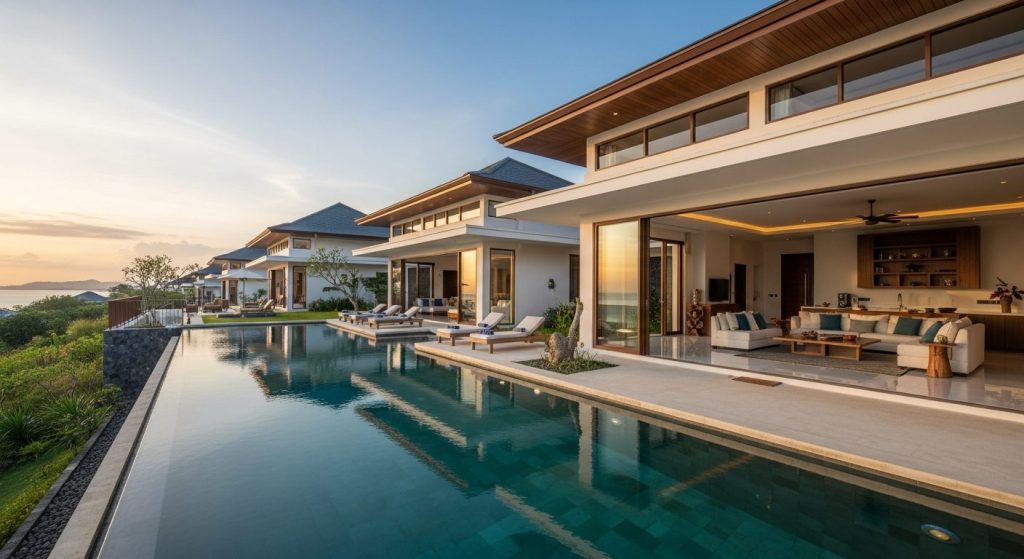
For individuals considering a direct stake in Indonesia’s burgeoning tourism sector, Mandalika villa investment presents a distinct opportunity within the Special Economic Zone (KEK) Mandalika. This page provides a research-led overview of the landscape for acquiring villas and branded residences in this designated area of Central Lombok, detailing typologies, regulatory pathways, and key factors for consideration.
Understanding KEK Mandalika’s Growth Drivers
The Mandalika Special Economic Zone (KEK Mandalika), managed by the Indonesia Tourism Development Corporation (ITDC), is a government-backed initiative designed to accelerate tourism and economic growth in Central Lombok. Established under Government Regulation No. 52 of 2014, KEK Mandalika spans approximately 1,175 hectares, with a master plan that includes international-standard hotels, resorts, commercial areas, and a world-class motorsport circuit.
The Role of the Pertamina Mandalika International Circuit
The Pertamina Mandalika International Circuit is a primary driver of visitor numbers and investment interest. Hosting events such as the MotoGP and World Superbike (WSBK) championships, the circuit significantly boosts demand for accommodation and related services. These events draw tens of thousands of spectators, team personnel, and media, creating peak occupancy periods for hotels, villas, and short-term rentals within and around the KEK Mandalika area. The ITDC’s strategy leverages this international exposure to attract further foreign direct investment (FDI) into tourism infrastructure and accommodation.
ITDC Master Plan and Infrastructure Development
The ITDC master plan for The Mandalika outlines phased development, with significant ongoing infrastructure improvements. These include road networks, utilities, and public spaces designed to support high-end tourism and residential projects. Continued government commitment to infrastructure, coupled with private sector investment in hotels and resorts, underpins the long-term growth trajectory of the zone. Updates to this master plan, often communicated through official ITDC channels, provide critical context for any Mandalika villa investment opportunity.
Mandalika Villa Investment Landscape: Typologies and Opportunities
The villa market in Mandalika is evolving, offering several distinct typologies catering to different investor objectives and guest preferences. Understanding these categories is crucial for investors assessing an opportunity to invest in Mandalika villa Lombok.
Mandalika Luxury Villa Investment Oceanview
Luxury villas, particularly those with ocean views, represent the premium segment of the Mandalika market. These properties typically feature expansive designs, high-end finishes, private pools, and often occupy prime hillside or beachfront locations within KEK Mandalika or its immediate vicinity. Demand for Mandalika luxury villa investment oceanview properties is driven by affluent tourists seeking privacy, exclusivity, and direct access to Lombok’s natural beauty. These villas often command higher rental rates and appeal to a niche market, impacting potential rental yields.
Mandalika Family Villa Investment
Family villas are designed to accommodate larger groups, often featuring multiple bedrooms, communal living spaces, and amenities suitable for children. These properties are positioned to cater to the growing segment of family tourism, which seeks value, space, and convenience. Locations are typically chosen for proximity to beaches, dining options, and recreational activities. An investment in a Mandalika family villa aims to capture a broader market segment, potentially leading to more consistent occupancy rates outside of major event periods.
Turnkey Villa Investment Mandalika Lombok
Turnkey villa investment Mandalika Lombok options are offered by developers who manage the entire process from construction to furnishing and, in some cases, property management. These solutions are designed to simplify the investment process for buyers, particularly those residing overseas or with limited time. They often come with pre-arranged rental management agreements, allowing investors to participate in a rental pool or have their property managed professionally. This model can reduce the operational burden on the investor but requires careful review of management fees and rental-pool economics.
The Rise of Mandalika Branded Residences Investment
A significant development within KEK Mandalika is the emergence of branded residences. This model involves residential properties that are affiliated with an established hotel brand, benefiting from its services, amenities, and global marketing network. Mandalika branded residences investment opportunities are typically situated within larger resort complexes and offer buyers access to facilities such as spas, restaurants, concierge services, and security, managed by the associated brand.
Benefits of Branded Residences
Investing in a branded residence can offer several advantages:
- Brand Recognition:
- Leverages the established reputation and marketing reach of an international hotel brand, potentially attracting a wider pool of guests and achieving higher occupancy rates.
- Service & Amenities:
- Owners and guests benefit from hotel-standard services and access to premium facilities, enhancing the guest experience and property value.
- Professional Management:
- The property is managed by the hotel operator, ensuring professional maintenance, housekeeping, and rental management. This can be particularly appealing for absentee owners.
- Potential for Value Appreciation:
- The association with a reputable brand can contribute to stronger long-term value appreciation compared to independent properties, though this is not guaranteed.
These properties often come with a rental-pool agreement, where owners participate in a shared revenue model, or direct rental management by the brand. The specifics of these agreements, including revenue splits and usage policies for owners, are critical details that require thorough review with legal counsel.
Key Investment Considerations: Price Ranges and ROI Drivers
Evaluating a Mandalika villa investment requires a detailed understanding of indicative price ranges and the factors influencing potential return on investment (ROI) and rental yields. It is important to emphasize that all figures provided are indicative and subject to market fluctuations, developer specifics, and prevailing economic conditions. We advise verifying current pricing and availability directly with developers and through a licensed property adviser.
Mandalika Villa Investment Price Range (Indicative, Last Verified June 2026)
The cost of a villa in KEK Mandalika varies significantly based on factors such as location (oceanview, hillside, inland), size, number of bedrooms, level of finish, and whether it is part of a branded development or an independent project. The following provides a broad indicative range:
- Entry-Level/Standard Villas (2-3 bedrooms, non-oceanview): From approximately IDR 3.5 billion to IDR 8 billion.
- Mid-Range Villas (3-4 bedrooms, partial oceanview or prime location): From approximately IDR 8 billion to IDR 15 billion.
- Luxury Oceanview Villas & Branded Residences (4+ bedrooms, premium finishes, prime location): From approximately IDR 15 billion to IDR 30+ billion.
These ranges are for completed or off-plan properties and do not include additional costs such as taxes, legal fees, or furnishings unless explicitly stated by the developer. The Mandalika villa investment price range is dynamic and influenced by market demand and new project launches.
Mandalika Villa Investment ROI and Rental Yield Drivers
The potential for Mandalika villa investment ROI and Mandalika villa rental yield is influenced by several factors unique to the region:
- MotoGP and Event Tourism:
- Major events at the Pertamina Mandalika International Circuit create periods of extremely high demand, allowing for premium rental rates. However, occupancy outside these peak periods is crucial for consistent returns.
- Occupancy Rates:
- General tourism growth in Lombok, facilitated by improved air connectivity and marketing efforts, directly impacts average annual occupancy. Effective marketing and property management are vital.
- Rental Pool Economics:
- For properties participating in a rental pool, the terms of the agreement – including revenue splits, management fees, and owner usage policies – directly affect net income. Transparency and a clear understanding of these terms are essential.
- Property Management Quality:
- High-quality property management ensures guest satisfaction, repeat bookings, and efficient maintenance, all contributing to sustained rental performance.
- Property Type and Features:
- Luxury oceanview villas and well-appointed family villas often attract different segments of the market with varying willingness to pay. Unique features or exceptional service can justify higher rates.
Projected yields should be viewed as estimates and thoroughly cross-referenced with independent market data and professional financial advice. Factors such as local competition, global economic conditions, and changes in tourism trends can all impact actual returns.
Case Study: SAPO Development Lombok – A Tangible Mandalika Villa Investment Opportunity
To illustrate a concrete example of a new Mandalika villa investment, we can examine the SAPO Development Lombok project. This development, backed by a Spanish-affiliated foreign direct investment (FDI), represents a verifiable commitment to the region’s growth. The specific details of this project, as publicly disclosed, provide a tangible example of how foreign capital is entering the Mandalika market for lombok luxury villa investment development.
Project Details: SAPO Development Lombok
SAPO Development Lombok signed a Land Utilization Development Agreement (LUDA) with ITDC in January 2026. This agreement outlines plans for the development of approximately 80 villas, comprising 50 exclusive units and 30 standard units. The total investment committed for this phase is €2.76 million, which translates to approximately Rp 55 billion based on prevailing exchange rates at the time of the agreement. The project is situated on land lots KGH1 and KGH2 within KEK Mandalika.
Targeted groundbreaking for the SAPO Development Lombok project is set for July 2026, with an anticipated opening in 2028. This timeframe provides a realistic view of the development cycle for significant villa projects in the area. The focus on both exclusive and standard units suggests a strategy to address different segments of the luxury villa market, from high-net-worth individuals to those seeking a well-appointed, professionally managed property. This project exemplifies the kind of foreign investment in Spanish SAPO Group Mandalika villa development that is contributing to the KEK’s expansion.
For investors, understanding such verifiable projects provides a baseline for market activity, construction timelines, and developer commitment within the KEK Mandalika. It moves discussions beyond speculative figures to concrete, planned developments.
Mandalika Invest Guide is dedicated to providing clear, independent information to help you navigate the investment landscape. For personalized guidance on potential investment pathways and to connect with vetted legal and property experts, you can plan your trip with us. We can also assist via WhatsApp to help frame your research questions.
Navigating Entry Routes for Investing in Mandalika Villas
Foreign and domestic investors have several established pathways to acquire property in KEK Mandalika. The choice of entry route depends on the investor’s nationality, investment scale, and long-term objectives. Understanding these options is critical for anyone looking to invest in Mandalika villa Lombok.
1. PT PMA (Penanaman Modal Asing – Foreign Investment Company)
This is the most common and robust route for foreign investors. Establishing a PT PMA allows a foreign entity to operate as an Indonesian legal entity, granting it the right to hold Hak Guna Bangunan (HGB – Right to Build) and Hak Guna Usaha (HGU – Right to Cultivate) land titles for a period, typically 30 years, extendable for another 20 + 30 years. This structure provides direct control over the business and assets. For villa investments, a PT PMA would typically acquire HGB rights to build and operate villas for commercial purposes (e.g., rental). The process involves registration with the Investment Coordinating Board (BKPM) and obtaining various permits through the Online Single Submission (OSS) system.
2. Hak Pakai (Right to Use) / Leasehold Agreements
Hak Pakai is a land title that grants the right to use land for a specified period, typically 30 years, extendable for another 20 + 30 years. This right can be granted to Indonesian citizens, Indonesian legal entities, and also to foreign individuals residing in Indonesia. For foreign investors not wishing to establish a PT PMA, Hak Pakai offers a direct leasehold arrangement, often through a developer who holds the primary land title (e.g., HGB or Hak Milik). This route provides a long-term right to use and build on the land without requiring an Indonesian company structure, though ownership of the physical structure built on the land is distinct from the land title itself. It’s a common model for individual villa purchases within larger developments.
3. Land Utilization Development Agreements (LUDA) with ITDC
For larger-scale developments, particularly within KEK Mandalika, investors often enter into Land Utilization Development Agreements (LUDAs) directly with ITDC. As seen with the SAPO Development Lombok, a LUDA is a contractual agreement that grants the developer the right to utilize and develop specific land parcels within the KEK for a defined period and purpose, typically for large-scale tourism infrastructure like resorts, hotels, and villa complexes. These agreements outline the development plan, investment commitment, and operational framework. LUDAs are a mechanism for ITDC to control and coordinate development within the KEK, ensuring alignment with its master plan and attracting significant FDI.
Each of these routes has distinct legal, financial, and operational implications. It is paramount to consult with licensed Indonesian legal professionals and investment advisors to determine the most suitable structure for your specific investment goals and risk profile.
Tax Incentives within KEK Mandalika
One of the primary attractions of investing in KEK Mandalika is the package of tax and non-tax incentives offered by the Indonesian government. These incentives are designed to make investment more appealing and competitive compared to other regions.
Key Tax Incentives
- Corporate Income Tax Reduction:
- Investors in certain priority sectors within KEK Mandalika may be eligible for corporate income tax reductions (tax holidays) for a specified period, depending on the investment value and sector. This can range from 10% to 100% reduction for up to 25 years.
- Value Added Tax (VAT) and Luxury Goods Sales Tax (LST) Exemption:
- Exemptions or deferrals on VAT and LST may apply to certain goods and services used for development or consumed within the KEK, such as the import of capital goods or raw materials for construction.
- Customs Duty Exemption:
- Exemptions from import duties on capital goods, machinery, and raw materials used for KEK-based projects. This reduces the initial setup cost for large developments.
- Land and Building Tax (PBB) Reductions:
- Potential reductions or deferrals on Land and Building Tax, particularly during the construction and early operational phases of a project.
The specific incentives available, their duration, and eligibility criteria are subject to prevailing government regulations and may require direct application and approval from relevant authorities such as BKPM and the Directorate General of Taxation. Investors should seek advice from licensed tax consultants specializing in Indonesian investment law to fully understand the applicable benefits.
Regulatory Framework and Who Can Invest
The regulatory environment in KEK Mandalika is designed to be streamlined for investors, but adherence to Indonesian law remains paramount. The Investment Coordinating Board (BKPM) serves as the primary gateway for investment, facilitating approvals and licenses through the Online Single Submission (OSS) system.
Who Can Invest?
- Foreign Individuals: Can acquire property through leasehold arrangements (Hak Pakai) or indirectly via a PT PMA. Direct freehold ownership for foreign individuals is not permitted under Indonesian law.
- Foreign Legal Entities: Typically invest through establishing a PT PMA in Indonesia, which then holds HGB or HGU titles for commercial purposes.
- Indonesian Individuals: Can hold Hak Milik (freehold) titles.
- Indonesian Legal Entities: Can hold Hak Milik (freehold) and HGB titles.
All investments, foreign or domestic, must comply with national spatial planning regulations, environmental impact assessments (AMDAL), and specific KEK Mandalika guidelines set by ITDC. The ITDC itself plays a significant role in approving development plans and ensuring projects align with the overall vision for the KEK. Regular engagement with ITDC’s official channels and local government offices is advisable to stay informed on regulatory updates and compliance requirements.
Important Disclaimers and Next Steps
Mandalika Invest Guide provides independent, research-led information for educational purposes only. This content is not intended to be, and should not be construed as, financial, legal, tax, or investment advice. The information presented here, including indicative price ranges and potential ROI drivers, is based on publicly available data and market observations as of June 2026 and is subject to change without notice.
Investing in property, especially in emerging markets, carries inherent risks, including market fluctuations, regulatory changes, and economic volatility. There is no guarantee of specific returns or yields. Any investment decision should be made only after thorough due diligence, independent verification of all facts, and consultation with licensed and qualified professionals.
Before making any investment decisions related to Mandalika villas or branded residences, we strongly recommend that you:
- Consult Licensed Legal Advisors: To understand the intricacies of Indonesian property law, land titles, and investment structures (e.g., PT PMA, Hak Pakai).
- Engage Licensed Property Advisors: For up-to-date market analysis, developer credibility assessments, and negotiation support.
- Seek Professional Tax Advice: To fully understand the tax implications of your investment, including available incentives and ongoing obligations.
- Verify with Official Channels: Directly engage with ITDC (Indonesia Tourism Development Corporation), BKPM (Investment Coordinating Board), and the OSS (Online Single Submission) system for the most current official information, regulations, and project approvals.
Mandalika Invest Guide is committed to providing unbiased information. No one can pay to change what we publish. If you proceed with our vetted partners for legal, property, or advisory services, they may pay us a referral fee at no extra cost to you. This helps support our independent research and content creation.
To begin framing your research questions or to connect with licensed legal, property, and advisory partners specializing in KEK Mandalika, please plan your trip with us. We are available to assist you via WhatsApp for preliminary discussions.
Frequently Asked Questions About Mandalika Villa Investment
Can foreigners own land outright in Mandalika?
No, under Indonesian law, foreign individuals cannot hold Hak Milik (freehold) land titles. Foreigners can, however, acquire long-term leasehold rights (Hak Pakai, typically 30 years and extendable) or invest through an Indonesian legal entity such as a PT PMA (Foreign Investment Company) which can hold Hak Guna Bangunan (Right to Build) titles.
What is the typical rental yield for villas in Mandalika?
Typical rental yields for Mandalika villas vary significantly based on location, property type (luxury, family, branded), management quality, and market conditions. While some developers may project gross yields, net yields are influenced by operating costs, management fees, and actual occupancy rates. Event-driven tourism from MotoGP can create peak periods, but consistent year-round occupancy is key. Always verify projections with independent market research and a licensed financial advisor.
Are there specific areas within KEK Mandalika that are better for villa investment?
Prime locations within KEK Mandalika often include areas with ocean views, proximity to beaches (like Tanjung Aan or Gerupuk), or direct access to the Pertamina Mandalika International Circuit. These locations generally command higher property values and rental rates. However, accessibility, infrastructure, and the specific developer’s master plan also play a crucial role in determining an area’s investment potential. Researching ITDC’s zoning plans and consulting local property experts is recommended.
What are the main risks associated with investing in Mandalika villas?
Key risks include market volatility, changes in tourism trends, regulatory shifts, currency fluctuations, and potential competition from new developments. For off-plan properties, construction delays or developer insolvency can also be risks. It is essential to conduct thorough due diligence on the developer, understand the local market dynamics, and seek comprehensive legal and financial advice to mitigate these risks.
How does a branded residence differ from a standard villa investment?
A branded residence is typically part of a larger resort complex and is managed by an established hotel brand. Owners benefit from access to hotel amenities, services (e.g., concierge, housekeeping), and the brand’s global marketing network, which can enhance rental potential and property value. Standard villa investments, on the other hand, are often independent properties managed by the owner or a third-party property management company, offering more autonomy but requiring more direct oversight or reliance on external services.